“SOMEWHERE OVER THE RAINBOW” – Chord/Melody solo ukulele arrangement by Ukulele Mike Lynch

https://vimeo.com/79508674
My arrangement of Somewhere Over The Rainbow is a Chord/Melody piece. That means you play a chord and the melody, for the most part, “rides” on the first string. I chose the Key of F since it worked well with this song. The key of F is one of the most popular solo instrumental keys for the Ukulele. As in most Chord/Melody pieces we play the entire piece with the right thumb. No fingerpicking is needed. Using the flesh of the thumb rather than the nail also gives a sweet warm sound to the uke. I also find that stroking the strings up close to the neck rather than the soundhole also provides for a better sound.

One of the significant aspects of this arrangement is my use of “jazz” chords. . . Principally m7 dim7 aug and maj7 . . . Check out the short clip below and try out these
delicious sounding chords.
JAZZ CHORDS:

“SOMEWHERE OVER THE RAINBOW” is included in the new massive 52 song CHORD/MELODY eBook
$20.00 . . can be purchased by paying through the paypal donate button on the Ukulele Mike website: http://www.ukulelemikelynch.com Once purchased, it will be emailed to you within the day.


Each Chord/Melody eBook can be purchased separately for just $20.00 or all together at a new combo “TRILOGY” discount of just $50.00



All 4 of the Chord melody ebooks can be purchased at a combo discount price of $70.

For information regarding any ukulele product please email: TheUkuleleMan2012@hotmail.com
“All Through The Night” – A Welsh lullaby – Solo ukulele arrangement by Ukulele Mike Lynch

According to Wikipedia we learn:
Ar Hyd y Nos (English: All Through the Night) is a Welsh folksong sung to a tune that was first recorded in Edward Jones’ Musical and Poetical Relics of the Welsh Bards (1784). The Welsh lyrics were written by John Ceiriog Hughes, and have been translated into several languages, including English (most famously by Harry Boulton) and Breton. One of the earliest English versions was by Thomas Oliphant in 1862.
The melody was used by John Gay in The Beggar’s Opera. It is also used in the hymn “Go My Children With My Blessing.”
The song is highly popular with traditional Welsh male voice choirs, and is sung by them at festivals in Wales and around the world.
The song is also sometimes considered a Christmas carol, and as such has been covered by numerous artists on Christmas albums, most recently including Olivia Newton-John and Michael McDonald who performed the song as a duet on Newton-John’s 2007 album Christmas Wish. Cerys Matthews has also sung the song on her 2010 album Tir.
Below is a YouTube performance of my arrangement of ALL THROUGH THE NIGHT
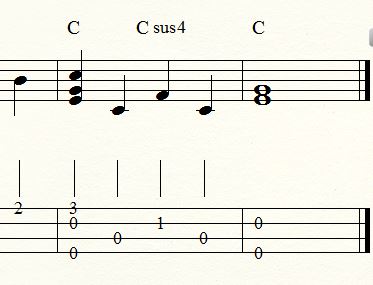
My arrangement uses exclusively a fingerpicking style. Thumb plays the 4th and 3rd string. Index finger plays the 2nd string and the Middle finger plays the 1st string. Throughout the A theme you need to merely get the chord denoted above the staff and for the most part the left hand fingers are already in place. The 3rd measure as noted in example below is the D chord which uses the index finger as a barre finger on the second fret.

In the example below note the Csus4 (Csuspended 4th) chord used just before the final chord. The suspended chords are used in folk music and generally in most hymn tunes. The suspended note is the “A” of “A-men” . . .
“All Through The Night” is available in tablature and standard notation format and can be purchased for $5.39 by paying through the paypal button
on my website: http://www.ukulelemikelynch.com
ALL THROUGH THE NIGHT now heard on the newly released “HEART STRINGS” CD which can be purchased for $12.95 through the paypal donate button the Ukulele Mike website: http://www.ukulelemikelynch.com $3.00 shipping within the US . . $7.00 shipping outside the US
“Let Me Call You Sweetheart” – Ukulele tutorial by Ukulele Mike Lynch

According to Wikipedia
“Let Me Call You Sweetheart” is a popular song, with music by Leo Friedman and lyrics by Beth Slater Whitson. The song was published in 1910 and first recorded by The Peerless Quartet.
The complete lyrics:
I am dreaming Dear of you, day by dayDreaming when the skies are blue, When they’re gray;When the silv’ry moonlight gleams, Still I wander on in dreams,In a land of love, it seems, Just with you.Let me call you “Sweetheart,” I’m in love with you.Let me hear you whisper that you love me too.Keep the love-light glowing in your eyes so true.Let me call you “Sweetheart,” I’m in love with you.Longing for you all the while, More and more;Longing for the sunny smile, I adore;Birds are singing far and near, Roses blooming ev’rywhereYou, alone, my heart can cheer; You, just you.Let me call you “Sweetheart,” I’m in love with you.Let me hear you whisper that you love me too.Keep the love-light glowing in your eyes so true.Let me call you “Sweetheart,” I’m in love with you.
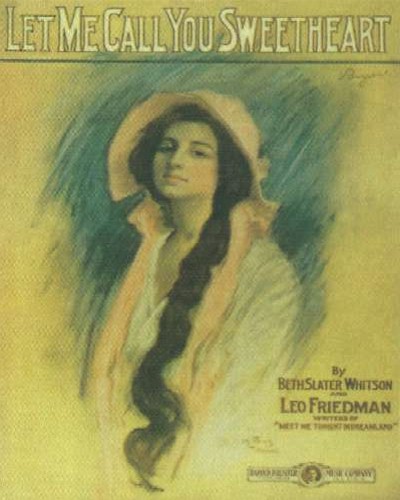
The girl who modeled for the original sheet music is alleged [according to whom?] to have been Virginia Rappe, the subject of the 1921 Roscoe ‘Fatty’ Arbuckle scandal.
Among the thousands of mainstream appearances of this pop standard are a British advert for mobile phone operator and internet service provider Orange SA, involving a wind-up toy of two figures hugging. The version used in this advert was sung by Oliver Hardy from the 1938 film Swiss Miss, made with his comic partner Stan Laurel. This song was also sung in an episode of Our Gang (the Little Rascals) by Alfalfa Switzer.
It was performed by George Hearn in Barney’s Great Adventure, instrumentally by a band in The Greatest Game Ever Played and by Megan Follows in Anne of Green Gables: The Continuing Story.
It was also sung by a group of Boy Scouts in the film Follow Me Boys.
It was also performed by Dorothy Custer (born May 30, 1911) an American comedian, harmonicist, and centenarian, who sang the song on Valentine’s Day 2012 to Jay Leno on The Tonight Show with Jay Leno.
The song was recorded by Bette Midler for the film “The Rose” and the accompanying “The Rose Soundtrack”.
The song was sung in an episode of Downton Abbey broadcast on ITV1 on 23rd September 2012.
My YouTube performance and tutorial of Let Me Call You Sweetheart
Ukulele chords used for Let Me Call You Sweetheart

I play this song in a 3/4 waltz time. The strum I use is simply
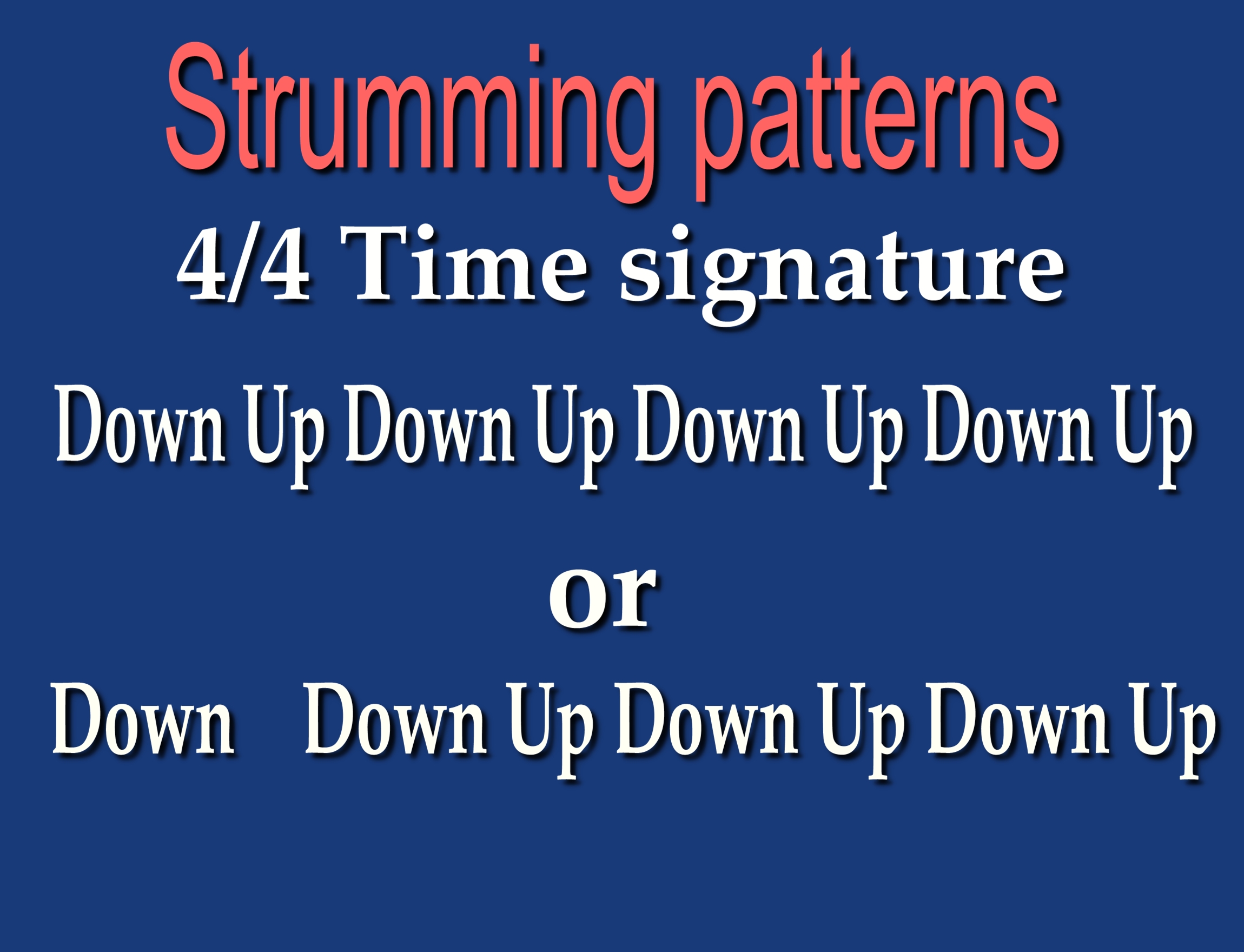
Down Down Up Down Up. . . As always in waltz time, accent the first beat and soften up on the others. so. . . DOWN down up down up etc. etc.
The song opens with a short 4 bar vamp. One can repeat the vamp as many times as they wish. The vamp doubles as an interlude between repeats of the chorus.
“LET ME CALL YOU SWEETHEART” is contained in my SONGS OF YESTERYEAR eBook.
It sells for $22.95 and can be purchased by paying through the paypal donate button on the Ukulele Mike website: http://www.ukulelemikelynch.com
Here is a blog regarding my “SONGS OF YESTERYEAR” eBook . . .
SONGS OF YESTERYEAR for the UKULELE – Arranged & Compiled by “UKULELE MIKE” LYNCH

From Wikipedia . . .
“America the Beautiful” is an American patriotic song. The lyrics were written by Katherine Lee Bates, and the music was composed by church organist and choirmaster Samuel A. Ward.
Bates originally wrote the words as a poem, Pikes Peak, first published in the Fourth of July edition of the church periodical The Congregationalist in 1895. At that time, the poem was titled America for publication.
Ward had originally written the music, Materna, for the hymn O Mother dear, Jerusalem in 1882, though it was not first published until 1892. Ward’s music combined with the Bates poem was first published in 1910 and titled America the Beautiful.
The song is one of the most popular of the many American patriotic songs.
In 1893, at the age of thirty-six, Bates, an English professor at Wellesley College, had taken a train trip to Colorado Springs, Colorado, to teach a short summer school session at Colorado College. Several of the sights on her trip inspired her, and they found their way into her poem, including the World’s Columbian Exposition in Chicago, the “White City” with its promise of the future contained within its alabaster buildings; the wheat fields of America’s heartland Kansas, through which her train was riding on July 16; and the majestic view of the Great Plains from high atop Zebulon’s Pikes Peak.
On the pinnacle of that mountain, the words of the poem started to come to her, and she wrote them down upon returning to her hotel room at the original Antlers Hotel. The poem was initially published two years later in The Congregationalist, to commemorate the Fourth of July. It quickly caught the public’s fancy. Amended versions were published in 1904 and 1913.
Several existing pieces of music were adapted to the poem. A hymn tune composed by Samuel A. Ward was generally considered the best music as early as 1910 and is still the popular tune today. Just as Bates had been inspired to write her poem, Ward too was inspired to compose his tune. The tune came to him while he was on a ferryboat trip from Coney Island back to his home in New York City, after a leisurely summer day in 1882, and he immediately wrote it down. He was so anxious to capture the tune in his head, he asked fellow passenger friend Harry Martin for his shirt cuff to write the tune on. He composed the tune for the old hymn “O Mother Dear, Jerusalem”, retitling the work “Materna”. Ward’s music combined with Bates’ poem were first published together in 1910 and titled, America the Beautiful.
Ward died in 1903, not knowing the national stature his music would attain, as the music was only first applied to the song in 1904. Bates was more fortunate, as the song’s popularity was well established by the time of her death in 1929.
At various times in the more than 100 years that have elapsed since the song was written, particularly during the John F. Kennedy administration, there have been efforts to give “America the Beautiful” legal status either as a national hymn, or as a national anthem equal to, or in place of, “The Star-Spangled Banner”, but so far this has not succeeded. Proponents prefer “America the Beautiful” for various reasons, saying it is easier to sing, more melodic, and more adaptable to new orchestrations while still remaining as easily recognizable as “The Star-Spangled Banner.” Some prefer “America the Beautiful” over “The Star-Spangled Banner” due to the latter’s war-oriented imagery. Others prefer “The Star-Spangled Banner” for the same reason. While that national dichotomy has stymied any effort at changing the tradition of the national anthem, “America the Beautiful” continues to be held in high esteem by a large number of Americans.
UKULELE TUTORIAL OF “AMERICA THE BEAUTIFUL” Found on YouTube
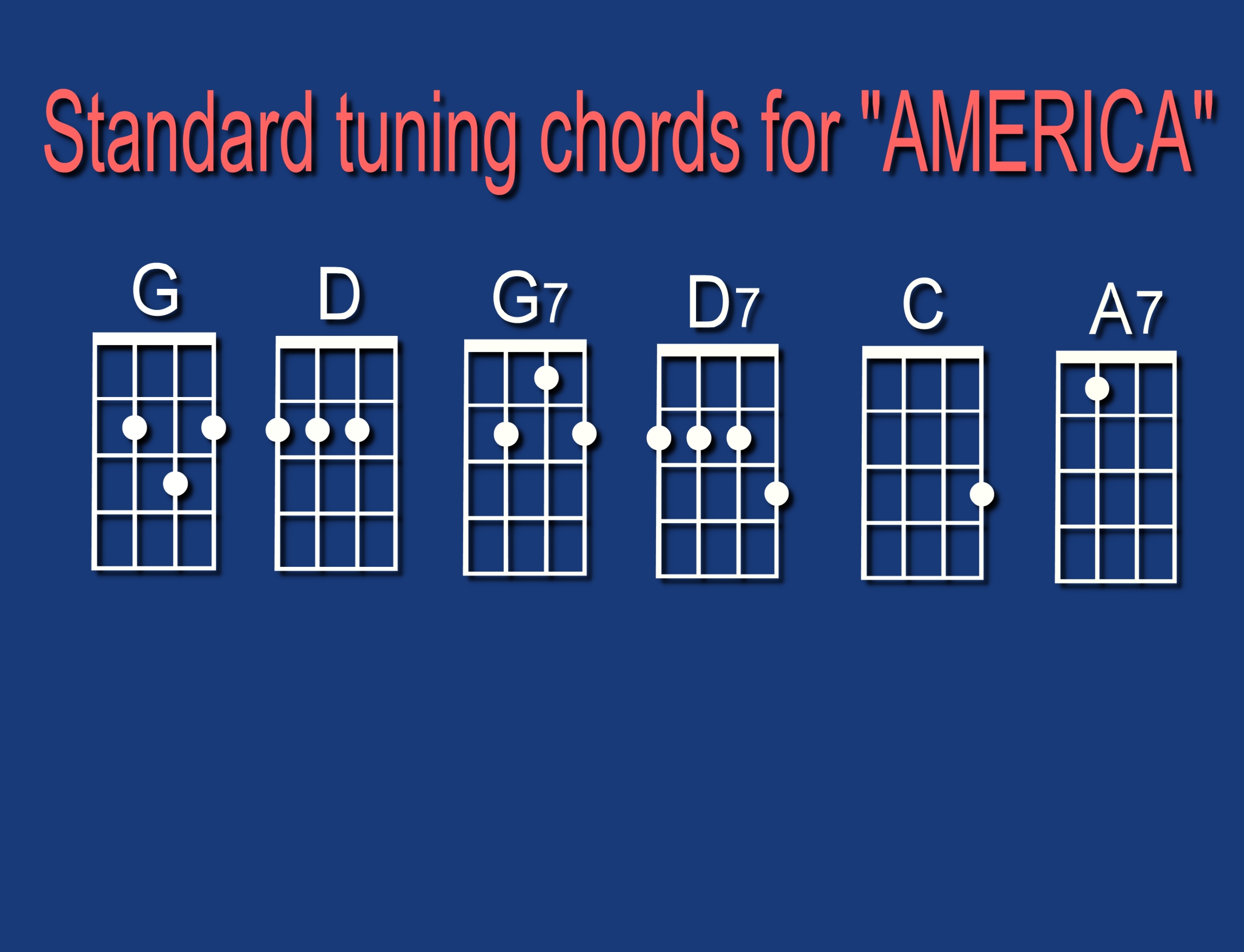
Here are the standard tuning chords used in playing “America The Beautiful”
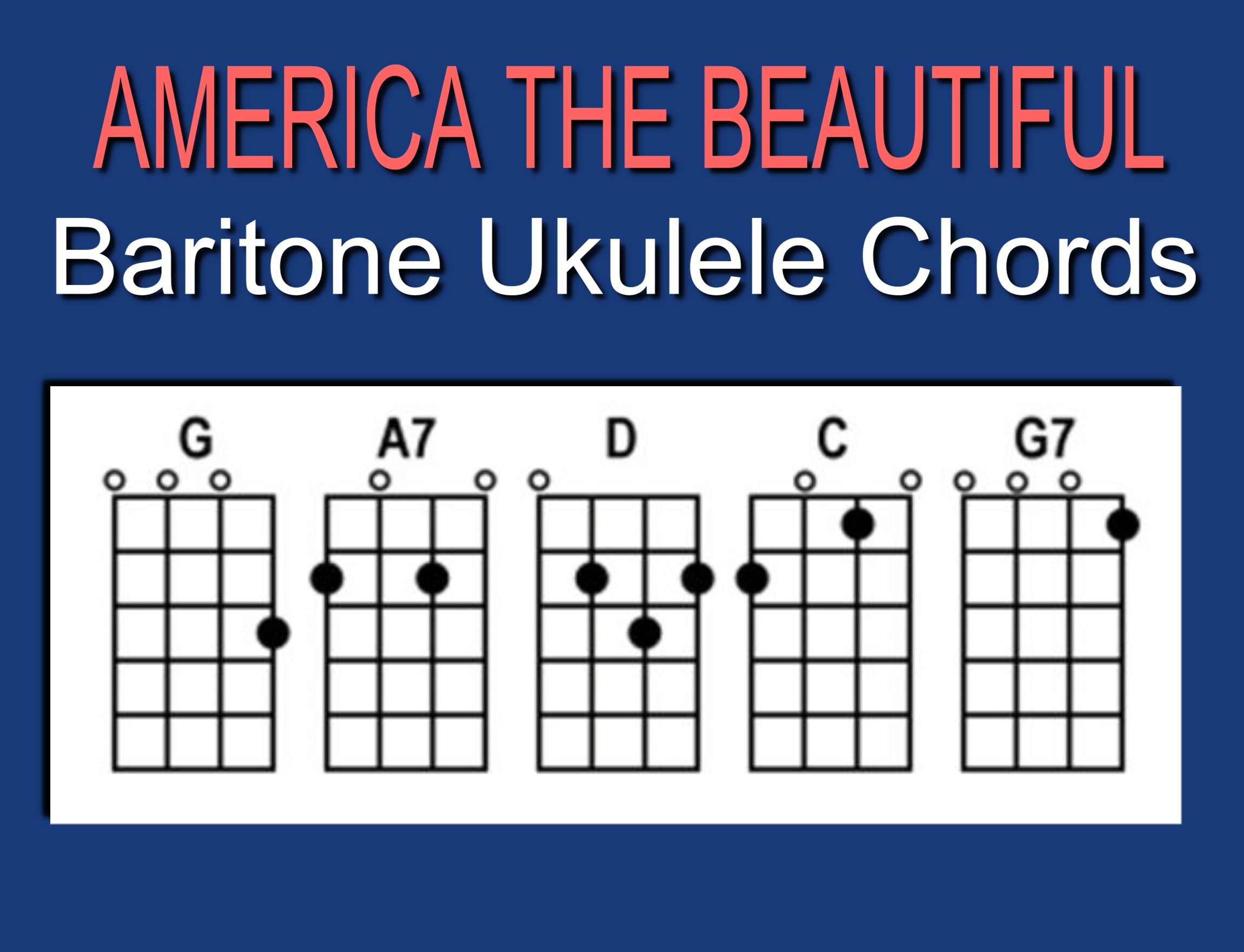
If you wish to play “America The Beautiful” on the baritone ukulele, here are the chords
Here are 2 strums used in this song

Here is a link to my Playlist of Ukulele Christmas Solo Instrumentals. You can play them all or pick and choose just the right one.
YouTube Playlist of Solo Ukulele arrangements by Ukulele Mike Lynch

Just trying to consolidate things and make things easier to find . . . Here is a link to my YouTube playlist of all my Solo Ukulele Instrumentals found on YouTube. These do not include others that might be found on my VIMEO channel . . .
Press play and go to view on YouTube to play the entire list or sort through and pick just the ones you want . . .
The blog below describes my COMPLETE catalog of Solo Ukulele instrumental tablatures available for purchase:
THE COMPLETE CATALOG OF UKULELE MIKE LYNCH SOLO UKULELE INSTRUMENTALS
“Für Elise” by Ludwig van Beethoven – Solo ukulele arrangement in Fingerpicking style by Ukulele Mike Lynch
According to Wikipedia we find that Fur Elise (For Elise) is one of Ludwig van Beethoven’s most popular compositions. The score was not published until 1867, 40 years after the composer’s death in 1827. The discoverer of the piece, Ludwig Nohl, affirmed that the original autographed manuscript, now lost, was dated 27 April 1810. It is not certain who “Elise” was. It has been suggested that Ludwig Nohl may have transcribed the title incorrectly and the original work may have been named “Für Therese” a reference to Therese Malfatti von Rohrenbach zu Dezza (1792–1851). She was a friend and student of Beethoven’s to whom he proposed in 1810, though she turned him down to marry the Austrian nobleman and state official Wilhelm von Droßdik in 1816.
Here is a YouTube video of my arrangement of this piece for solo ukulele:
“Fur Elise” is a full out fingerpicking arrangement. As in all of my fingerpicking pieces I assign the thumb to the 4th and 3rd strings. The index finger to the 2nd string and the middle finger to the 1st string.
I conceived this arrangement on a standard tuned ukulele with the 4th string being G above middle C. If you are playing a Low G tuned instrument then
the only changes you need to make are notated by the notes in parenthesis: e.g. (6). See short clip below . . .

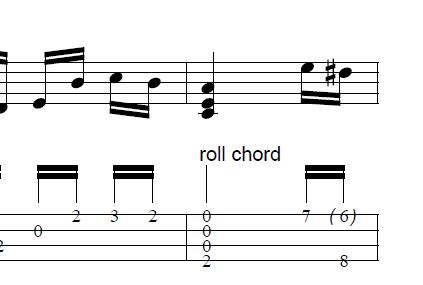
Although this piece is a fingerpicking piece there are a few places where it calls for a gently rolled chord to complete that particular section.
Simply use the right hand thumb with a gentle downward stroke.
See the clip below:
Tablature for this piece which indicates adjustments for Low G tuning is available for purchase: $5.39 by paying through the paypal donate button on my website: http://www.ukulelemikelynch.com
The tablature will be emailed as a pdf file within the day of purchase. I also include a Midi Audio file rendered at a slow practice tempo.
Check out this blog for current information on my complete catalog of solo ukulele instrumentals available https://allthingsukulele.com/2013/10/27/october-2013-update-on-ukulele-instrumentals-available-in-tablature-format/
I also have a “2 in 1” UKULELE CHRISTMAS ebook collection . . . Here is a blog detailing the contents of that book.
“UKULELE CHRISTMAS eBook” Now available from “UKULELE MIKE LYNCH”


I’ve recently had numerous people inquire about my solo compositions and arrangement for the ukulele.
The questions have been . . . what do I have available and how do I acquire them
Here is an update on all the currently available ukulele instrumentals that I’ve arranged.
First of all I offer my rather large eBook collection called UKULELE SOLO INSTRUMENTALS – 2013 Edition. . Below is the entire table of contents:
Amazing Grace
Aura Lea
Blackbird
Cherry Blossoms
Crazy G Part 1 & 2
Del Sol
Edelweiss
Finlandia
Freight Train
Going Home
Greensleeves
Here Comes The Sun
Here There & Everywhere
Keyport Rag
Kona Breeze
Lord Of All Hopefulness
Ode To Joy
Panis Angelicus
Paris Nocturne
River Of Dreams
The Rose Garden Serenade
Simple Gifts (AKA Lord Of The Dance)
Stairway To Heaven
Tammy
The Pink Panther
This Little Light Of Mine
Tiki Dance
Arirang
Bella Toscana
Baby’s Breath
Can’t Help Falling In Love
Etude in Dminor
I Dreamed A Dream
Beethoven Pathetique Sonata
Theme From Forrest Gump
Till There Was You
All pieces are arranged by Mike Lynch Aka: Ukulele Mike and are formatted in tablature. The eBook is available for purchase for $28.95 and can be purchased by paying thru the PayPal donate button on the UKULELE MIKE website: http://www.ukulelemikelynch.com Once purchased it will be emailed to you within the day. Happy Strumming – UKULELE MIKE
Here is a You Tube video describing the contents of this collection:
It’s always been my goal to make these arrangements accesible to many ukulele players of all levels. Many can be learned fairly easily for even newer players. Other pieces, of course, will be something one can grow into as more skills are developed. So often,I’ve found solo instrumental arrangements that are available in published form to be, for the most part, WAY beyond the abilities of most casual players. It is my sincere hope that this collection will help players become adept at performing instrumental solos and feel a sense of true accomplishment. . . .”HAPPY STRUMMING” – Mike Lynch
Here is the complete list of Solo Christmas Ukulele instrumentals in tablature format:
Angels We Have Heard On High
Away In A Manger
Coventry Carol
Good King Wenceslas
O Come Little Children
O Little Town Of Bethlehem
O Tannenbaum
Pat-A-Pan
Silent Night
Still, Still, Still
Up On The Housetop
We Three Kings
What Child Is This
White Christmas Chord/Melody Version
White Christmas (Fingerpicking vesion)
Winter Wonderland
These are all contained in my UKULELE CHRISTMAS eBook
And sells for $24.95
Here is another You Tube video further explaining the contents of the Christmas Ukulele eBook:
Yet, again, I have another instrumental Christmas collection called “Melodies Of Christmas” These pieces are arranged in ukulele tablature and they are all single note melodies with chords for accompaniment. Perfect for young players or beginning tablature players.

Here is a You Tube video describing in more detail the contents of the “Melodies Of Christmas” eBook.
I also have some more recently arranged pieces that are not contained
In any collection. They are stand alone arrangements available for $5.39 each.
Below is the list of tunes that fall in this category:
Akaka Falls
Ave Maria – Bach/Gounod (Heard on YouTube)
What A Wonderful World (on VIMEO)
Misty (on VIMEO)
I’ll Be Seeing You (on VIMEO)
Moon River (on VIMEO)
Peng You (Heard on YouTube)
Annie’s Song (on VIMEO)
Memory from Cats (on VIMEO)
Plaisir d’amour – French folk song (Heard on YouTube)
Smile (on VIMEO)
Today (on VIMEO)
Pokarekare ana – New Zealand Maori love song (Heard on YouTube)
O Mio Babbino Caro by Giacomo Puccini (Heard on YouTube)
Fur Elise by Ludwig van Beethoven (Tutorial on YouTube)
All Through The Night – A Welsh Lullaby (Heard on YouTube)
Somewhere Over The Rainbow – Chord/Melody (on VIMEO)
I’ll Be Home For Christmas – Chord/Melody (on VIMEO)
The Christmas Song “aka” Chestnuts Roasting On An Open Fire – Chord/Melody (on VIMEO)
Brahms Lullaby
Pachelbel Canon – Fingerpicking style
This Land Is Your Land – Fingerpicking (Travis style)
Mary Did You Know? – Chord/Melody style (Christmas)
My Favorite Things – (on VIMEO) Freely offered tablature
Ave Maria by Franz Schubert – Chord/Melody style (on You Tube)
The Prayer – Chord/Melody style . . . heard and seen on VIMEO
Most of these individual tabs can be heard on my VIMEO channel by merely typing in the name of the song with my name: Ukulele Mike Lynch.
The following links to blogs on my ALL THINGS UKULELE site should help in deciding what pieces you might with to learn:
So what’s new?? . . . New Solo Ukulele Instrumentals from arranger/performer Ukulele Mike Lynch
Massive CHORD/MELODY collection available now from Ukulele Mike Lynch

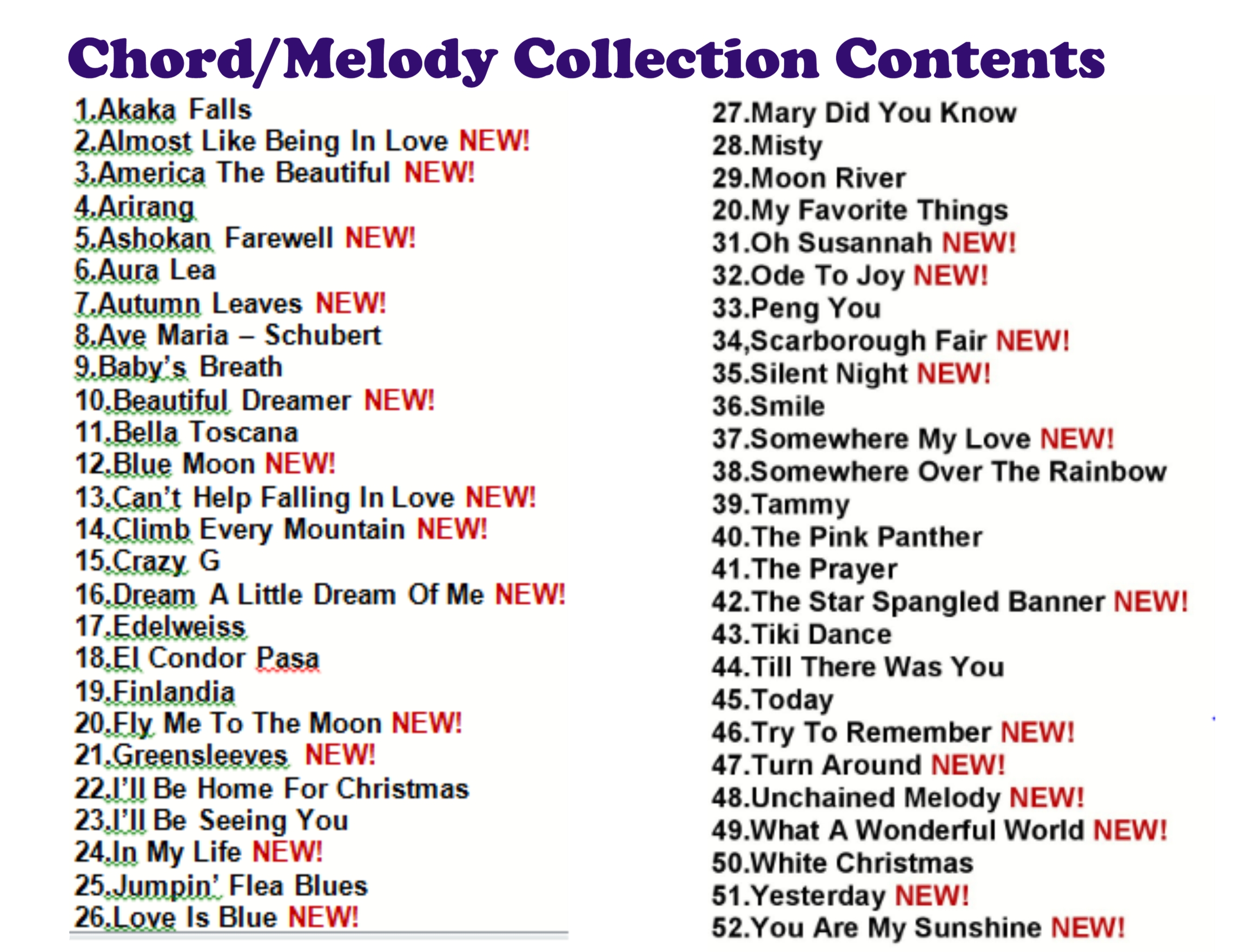
The CHORD/MELODY collection sells for $29.95
If you purchase both books simultaneously . . . UKULELE SOLO INSTRUMENTALS 2013 Edition along with the CHORD/MELODY eBook. You get a discount and can have both for the price of $48.90
They do have to be purchased at the same time, however.

A live performance of Annie’s Song by John Denver
“Annie’s Song” is a pop/country song recorded and written by singer-songwriter John Denver. It was his second number-one song in the United States, occupying that spot for two weeks in July 1974. “Annie’s Song” also went to number one on the Easy Listening chart. It went to number one in the United Kingdom, where it was Denver’s only major hit single (many of Denver’s American hits were more familiar in the UK through cover versions by other artists). Four years later, an instrumental version also became flutist James Galway’s only major British hit.
“Annie’s Song” was written as an ode to Denver’s wife at the time, Annie Martell Denver. Denver “wrote this song in July 1973 in about ten-and-a-half minutes one day on a ski lift” to the top of Ajax Mountain in Aspen, Colorado, as the physical exhilaration of having “just skied down a very difficult run” and the feeling of total immersion in the beauty of the colors and sounds that filled all senses inspired him to think about his wife
Below is a performance of my arrangement of Annie’s Song
My arrangement of Annie’s Song is a fingerpicking arrangement. As in the majority of my fingerpicking tunes I recommend using the thumb on the 4th and 3rd strings. The index finger on the 2nd string and the middle finger on the 1st string. This would be played in this fashion throughout the piece.
Look at the short example below.

The thumb plays the 4 4 2 0 on the 3rd string while the middle finger plays the 3 3 2 0 on the 1st string. After that the thumb would then switch to the 4th string. The index finger would play the 2nd string and middle finger would continue on playing the 1st string.
The one big exception to the fingering rule would be found at Meaure 32 when you have all 4 strings played simultaneously. Since we are only limiting ourselves to 3 fingers. I’m calling the thumb a finger here. Then we would play those 4 notes by simply rolling the chord in a downward strum.
Here is the clip to show that exception:
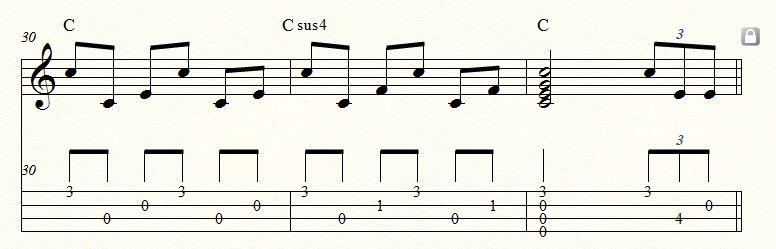
“Annie’s Song” is contained in my Ukulele Solo Instrumentals (Fingerpicking style) Volume 1 enhanced edition. It can be purchased by making a payment of $28.95 through the paypal button on the Ukulele Mike website: http://www.ukulelemikelynch.com

Table of Contents for Solo Ukulele Instrumentals Volume 1 enhanced edition

Once it is purchased, it will be personally emailed to you within the day . . .
I also currently have 3 collections comprising my Chord/Melody series . . . They can be purchased individually or all 3 together at a combined discount.

Any questions regarding any Ukulele product, please email: TheUkuleleMan2012@hotmail.com
“Pokarekare Ana” – Traditional New Zealand Maori Love Song – 1914 – arranged for solo ukulele (fingerpicking style) by Ukulele Mike Lynch

According to Wikipedia, we find that Pokarekare Ana is a traditional New Zealand love song written in Māori, probably communally composed about the time World War I began in 1914. It has been translated into English, and also enjoys some popularity in Australia
The song is very popular in New Zealand, and has been adapted for multiple purposes, including in advertising and by sporting groups. Notable uses include:
• “Sailing Away”, which promoted New Zealand’s 1987 America’s Cup challenge, and featured an ensemble choir of famous New Zealanders recording as ‘All Of Us’,
• It is best known worldwide through Air New Zealand’s TV advertisements in 2000. This version was performed by Rose Hanify (later of NZ Band Supermodel). In particular, the song became a phenomenon in Australia during the 2000 Summer Olympics in Sydney, where the song again became another unofficial anthem, this time for the success of Oceania into the new millennium, specificially during the time of the Olympic Games, and beyond
• “Pokarekare Ana” was sung at the opening of the 2009 World Games in Kaohsiung by Hayley Westenra and Russell Watson.
In popular culture, “Pokarekare Ana” was used as the theme song for the 2005 South Korean film Crying Fist.
Below is a performance of “Pokarekare Ana” on You Tube
My arrangement of Pokarekare Ana is in a rolling straight 8ths fingerpicking style. The melody primarily resides on the first string with the other 3 strings providing harmonic accompaniment. I’ve set this in the Key of C as it gives us a lot of open strings to help make this piece more accessible to more people. One, with a sense of improvisation, could treat it with a swing style if you wish. I’ve heard it in both styles. The short clip below is at the head of the piece and shows a typical chord played on the first beat of the measure with rolling arrpegios following. Try to roll those chords in a harp-like fashion to give it more elegance and depth.

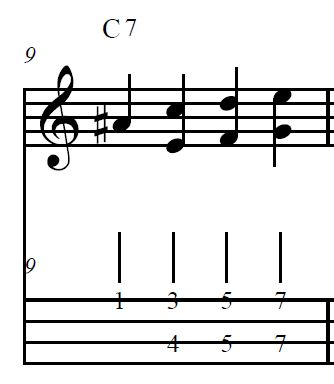
The music clip below shows a typical riff used in music arrangement. It is an inverted 6th interval. Not strictly a chord since it’s only 2 notes but you can hear this riff in SO many songs. Just imagine, if you can, the opening riff of “PEACE TRAIN” by Cat Stevens and you’ll know what I mean.
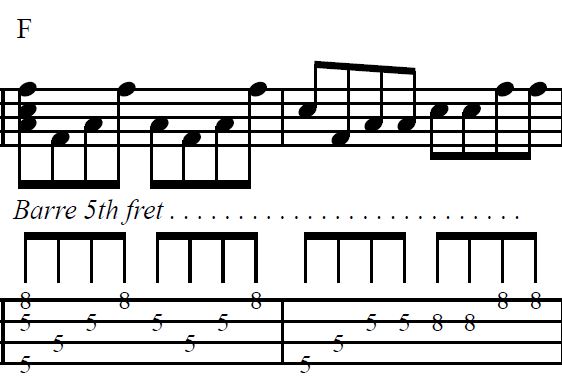
The third clip shows us doing some barring in this piece. At measure 10 we barre the 5th fret while the pinky play the 8th fret notes on both the first and second strings.
“Pokarkare Ana” is not included in any of the Ukulele Mike eBook collections. . . It is only available at this time as a single tablature. Sheet Music with standard notation as well as ukulele tablature is available for purchase $5.39 and can be purchased by paying thru the paypal donate button on the UKULELE MIKE website: http://www.ukulelemikelynch.com Once purchased it will be personally emailed to you within the day.
Questions regarding any Ukulele resource, please email: TheUkuleleMan2012@hotmail.com
 UKULELE MIKE LYNCH - All things UKULELE