PLEASE NOTE: My “UKULELE BASICS” DVD is currently available for purchase. . . For more information email me at mike@ukulelemikelynch.com

TIE ME KANGAROO DOWN was written by Rolf Harris in 1957 and thru the 60’s it became a runaway hit in Australia and throughout the world. No sing-a-long or hootenanny was complete without someone doing a rendition of this song. It was inspired by the success of the “calypsos” by Harry Belafonte and in this tutorial I’m using a “swing” version of the CALYPSO strum. . . DOWN DONW UP UP DOWN UP . . .
In Harris’ version, a dying Australian stockman instructs his friends to take care of his affairs when he is gone. The first of these is to watch his wallabies feed, then to tie his kangaroo down, since they jump around (which is the chorus). “Sport” is an Australian term of address, alluding to “good sport”, which often, as in this case, praises someone for carrying out a small favour one is asking of them. The lyrics mention animals and things associated with Australia, including cockatoos, koalas, platypuses, and didgeridoos. His last dying wish is “Tan me hide when I’m dead, Fred”. By the end of the song the stockman has died and his wish has been carried out: “We tanned his hide when he died, Clyde, and that’s it hanging on the shed”.
If you’re not acquainted with the CALYPSO STRUM, I’d suggest you take some time to practice that strum over and over without attempting to put it to chord changes. It’s important to have the strum pattern automatic and thoroughly programmed into your muscle memory. Without that sort of preparation then playing along with the chord changes could end up being a disaster. . . For so many it does take a fair amount of daily practice and patience to get the CALYPSO STRUM secure. Once you do, you will find it to be one of your best tools in your arsenal of strums. . . I’ve posted the songsheet with chords below to play along with my tutorial video.
“HAPPY STRUMMING” – UKULELE MIKE

TIE ME KANGAROO DOWN SONG SHEET


After composing THE KEYPORT RAG several weeks ago I became inspired to explore the Ragtime genre even more and THE ROSE GARDEN SERENADE was born. I’ve been intriqued by Ragtime music ever since I was in High School and I would play Scott Joplin rags on my piano day in and day out. My favorites were Maple Leaf Rag, Easy Winners, The Entertainer and Sunflower Slow Drag. Later in life I had an opportunity to visit the home of my mom down near Eugene, Oregon. The current owners of the home invited us in to see and recall what it was like as a child growing up. The most vivid memory I had of that house was the old upright player piano that sat in the corner of the living room. We would come down to Leaburg, Oregon to visit my grandma and she would always let me take those piano rolls out and play them. I was no more then 7 years old at the time but I would sit at the piano for hours pumping those pedals up and down to push air through the holes as they rolled over the device that moves the keys. I couldnt remember what songs it played but I just knew I LOVED THEM!!! . . . They were bright and cheery and so different then what I would be hearing on pop radio stations at the time. Coming home from that trip I shared those memories with my mom and she said the only song she could remember on that piano was something that had the name HELIOTROPE in it. . . Hmmmmm . . . I thought. . . I have that book of Joplin rags at home and it seemed to me there was a song in there with that name in it. I went home and pulled the book out and sure enough . . . there was THE HELIOTROPE BOUQUET!!!. . . I practiced it for a couple of weeks then next time I visted my mom I nonchalantly strolled into the room where our family piano was and sat down and began playing it. My mom was upstairs doing something and she immediately rushed downstairs exclaiming “That’s the song!!!! That’s the song I remember as a little girl” . . . Of course, I was so pleased with myself and it was like going thru a time machine . . . to a time in the distant past when things seemed so much simpler. That song has remained in my consciousness all of these years so when I set about to compose a new Ukulele Rag. . . I channeled Joplin and his HELIOTROPE BOUQUET to compose THE ROSE GARDEN SERENADE. It’s what Joplin would call a Slow Rag or “Slow Drag” . . . In fact he’s quoted somewhere that “Ragtime should NEVER be played fast” . . . A lot of ragtime performers do tend to play his rags probably much quicker in tempo then he conceived. At any rate. . . I hope you enjoy this piece and now I’m going back to my ukulele cause I got an inspiration JUST this morning for yet another rag. . . Stay tuned.
“HAPPY STRUMMING” – UKULELE MIKE

My Mom in front of the Leaburg, Oregon home
Tablature for ROSE GARDEN SERENADE is contained in my SOLO UKULELE INSTRUMENTAL eBOOK Volume 1 – $20.00 . . .. It can be purchased by paying through the donate button on my website: http://www.ukulelemikelynch.com Once purchased, it will be personally emailed to you within the day
Questions regarding any ukulele resources, please email: TheUkuleleMan2012@hotmail.com
THE PINK PANTHER – A lesson in playing melody via tablature notation by “UKULELE MIKE”
![pink-panther[1]](https://allthingsukulele.com/wp-content/uploads/2011/07/pink-panther1.jpg)
PLEASE NOTE: My “UKULELE BASICS” DVD is currently available for purchase. . . For more information email me at mike@ukulelemikelynch.com
The music of Henry Mancini spans decades of some of the most memorable film scores. . . Among his greatest hits were Days Of Wine & Roses, Moon River, Them from Mr. Lucky, Peter Gunn, Hatari, Baby Elephant Walk. The list goes on and on but probably the most recognized tune from the pen of Henry Mancini is the signature theme instrumental from the Peter Sellers movie series THE PINK PANTHER. With its unforgettable “hooky” jazz melody and surprising twists and turns of melody and chord changes, this song has earned a place in the treasure of classic jazz standards. I did this tutorial several years go and it was a spin off of a unit I did with my 5th grade Recorder students. We were doing a unit on jazz and I wanted to introduce a jazz like piece into their recorder lessons. It was an immediate HIT with the kids and we had “PANTHER” play off competitions. . . Our school mascot was the PANTHER by the way . . . .Later on I decided to interpret this song for the ukulele and have had great response online from the many You Tube subscribers around the world. I’ve attached the image file of this score at the bottom for your reference. Hope you enjoy the lesson and have funning learning this challenging tune. It can be a great vehicle for conquering tablature notation. Give it a try and please be patient with yourself. I usually tell my students to be happy with learning one or two measures a day. . . Play through the tablature. . . repeat it . . . then memorize that measure . . . the move on. Do NOT attempt to just sit down and slog thru the entire tune from beginning to end. Like I say it takes patience and daily practice but I think you will find it very rewarding.
“HAPPY STRUMMING” . . . Mike Lynch

P.S. By the way I have a rather large collection of Solo Ukulele instrumentals in tablature format available for purchase . . .
Here is a link that gives details to my complete catalog of solo instrumentals.
THE COMPLETE CATALOG OF UKULELE MIKE LYNCH SOLO UKULELE INSTRUMENTALS Oct. 2013
PLEASE NOTE: My “UKULELE BASICS” DVD is currently available for purchase. . . For more information email me at mike@ukulelemikelynch.com
“Jamaica Farewell” is a calypso song about the beauties of the West Indies Islands. The lyrics for the song were written by Lord Burgess who was born in Brooklyn, New York in 1926. His mother was from Barbados. It is believed that he actually pulled together from many folk sources to compose the song. The song first appeared on Harry Belafonte’s phemonally successful album Calypso. Soon it reached number 14 on Billboard’s Pop chart. It has been recorded by hundreds of artist but without a doubt it was Belafonte’s recording that made it a folk music classic.
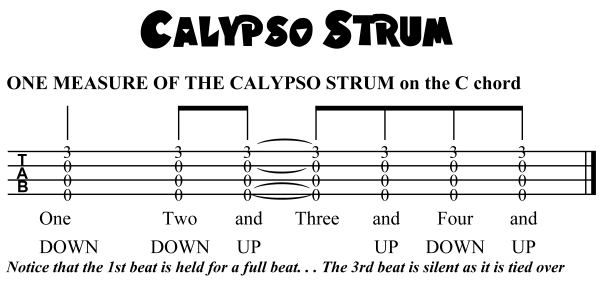
CALYPSO is a style of Afro-Caribbean music that originated in Trinidad and Tobago from African and European roots. The CALYPSO strum is noted for it’s light but syncopated nature. As you look at the strum pattern below you will see that is has 2 up strums one right after the other. It is this up filling that helps give it it’s distinctive feel. . . Accentuated by the fact that the first up is held which creates a syncopation at that point. Although it’s called the CALYPSO strum and obviously works perfectly with songs such as JAMAICA FAREWELL, but its is by no means relgated to only used in Caribbean music. The CALYPSO strum is a unique strum in that it works very very well in any 4/4 ballad and gives so many songs a light syncopated feel. Consider songs such as Day Is Done by Peter Paul & Mary or Four Strong Winds by Ian & Sylvia. . . Or even Leavin’ On A Jet Plane by John Denver. They all work beautiful with the CALYPSO strum pattern. It’s a pattern you want to definitely have in your arsenal of strums. . . It takes some time and patience to achieve. . . Practice right hand only with just a stable held chord before trying to introduce it into a song. You REALLY have to have this pattern “memorized” by your right hand. . . I call that “Muscle Memory” Listen to my You Tube video of Jamaica Farewell then play along with it to achieve a smooth feel for this strum. . . . “HAPPY STRUMMING” . . . UKULELE MIKE

SINGIN’ IN THE RAIN – A Seattle kinda song . . .
PLEASE NOTE: My “UKULELE BASICS” DVD is currently available for purchase. . . For more information email me at mike@ukulelemikelynch.com
Living here in Seattle, Washington USA we do have our share of rain but truthfully not as much as many other cities throughout the world. If we want to have REAL rain we go west a few miles into “TWILIGHT” country . . . The Olympic Rain Forest . . . . The abundance of rain coming in from the Pacific Ocean gets dropped on the west side of the Olympic Mountain range that tends to shield us a bit. . . What we really get is just grey days. . . Which, of course, makes those sunny days even more awesome. But be it sunny or not this classic by Nacio Herb Brown is a sure fire winner for the ukulele. It was my intention in this arrangement to make it easily playable by the most novice of ukulele players. Teaching young children to play the ukulele over the years has been a great learning experience for me in regards to arranging a piece for teaching and also making it teachable. I had a great opportunity to work with a group of young children from the Dallas area at the Dallas Lone Star Uke Festival in April and I chose this song as the key piece to teach the kids. Within 15 mins I had the entire group of children playing this piece. The reason it’s so attainable is due to the simple 2 chord patterns that simply alternate back and forth. (F to Am and then Gm6 to C7) Check out how easy those chords are and how quickly one can make the smooth transition between each chord. One of the key things that I emphasize in teaching and helping people to practice most efficiently is to take small groupings of chords and create loops. . . Constant repetition of those chord changes contributes to building up “muscle memory” in the fingers. . . Repetitive practice of a very small grouping of chords insures that the when you play those chords again they will be quickly found and the changes will be smooth and effortless. Perhaps one of the greatest mistakes that students of any musical instrument might do is to pick up the instrument and merely “play” thru the song. . . and call that practicing. Take those simple chord shifts F to Am and Gm6 to C7 and repeat them over and over and over again. Don’t even attempt to sing the song. Within a very short time your fingers will have nicely memorized those moves and it will become automatic. Once your left hand is automatic then you’ll feel even more confident to add your voice to the mix. Your brain won’t have to be working overtime on both the chord changes and singing. By the way, just an aside, this became a #1 Hit for Cliff Edwards also known “UKULELE IKE”, in the Broadway Review of 1929. In that production he accompanied himself on the ukulele. A little known fact is that Cliff Edwards went on to become the voice of Jiminy Cricket in Walt Disney’s Pinocchio and sang that unforgettable signature song: When You Wish Upon A Star. So I invite you to try this song today. I think you’ll be very pleased and surprised at how quickly you’ll be playing and singin in the rain.
“HAPPY STRUMMING”


BLUES IMPROVISATION FOR THE UKULELE by “UKULELE MIKE”
PLEASE NOTE: My “UKULELE BASICS” DVD is currently available for purchase. . . For more information email me at mike@ukulelemikelynch.com
A couple of years ago I posted some videos on the 12 bar blues. One in the key of A another in the Key of C and then in the Key of D. Over time I’ve received SO many nice comments on these lessons. . . I think people were just honestly amazed at how easily they could be playing this genre of music on the uke in no time at all. Therefore, I decided to tackle another element of the blues and that was actual blues melodic improvisation. I’ve done this over the years with the kids in my classroom and It never fails to amaze me at how quickly they would take to improvisation. I just think there is this primal need in most people to create and when you create something that is satisfying to your ear it makes you feel somehow fulfilled. . . You have gone beyond just copying other’s music but making your own. The cool thing about blues improv is that you have a limited scale to work in and therefore it allows you to make up your own leads with absolutely error free results. As long as you stay within the bounds of the blues scale and don’t venture out of it you can do NO wrong. . . The blues scale is based on a 5 tone “PENTATONIC” scale. The Pentatonic scale is found in cultures all over the world from Native American to Irish (Celtic) to Asian. . . There seems to be something universal about this PENTATONIC scale. . . I’m sure musicologists have weighed in on that. In fact the renowned cellist Yo Yo Ma has released CDs called THE SILK ROAD that shows the commonality between music that journeys along the 5 tone road. I employed the assistance of one of my students in the school (Anthony). I’ve known Anthony since he was born and I swear he was making music from day one. This young man plays Ukulele, Guitar, Keyboard, Drums, Native American Flute . . . you name it and he’ll play it. Right now he’s working on some new uke tunes to help me with my You Tube videos. . . In fact, he’s even posted his own You Tube lessons. Check out his lesson on “HEY SOUL SISTER”
So check out my lesson on blues scale improv and enjoy. . .
“HAPPY STRUMMING” – UKULELE MIKE LYNCH
PLEASE NOTE: My “UKULELE BASICS” DVD is currently available for purchase. . . For more information email me at mike@ukulelemikelynch.com
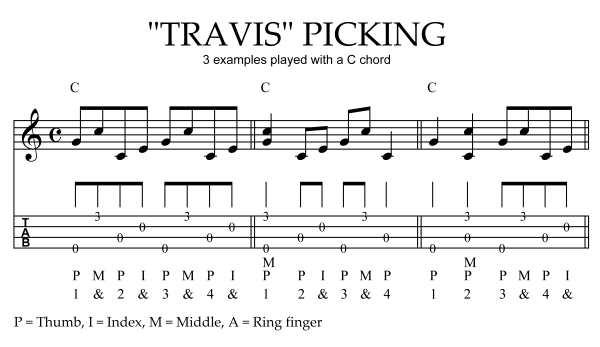
“TRAVIS” PICKING – A classic picking style from the Folk Era. Named after Merle Travis and popularized by Chet Atkins, it became a staple of all folk musicians in the 60’s. . . It can be heard in all the great folk classics of Peter Paul & Mary, Bob Dylan, Joan Baez, Kingston Trio, Brothers Four, Gordon Lightfoot etc. etc. The pattern is characterized by it’s consistent alernating thumb beat along with a swinging dotted 8th / 16th note rhythm in the upper strings. One of the coolest aspects of TRAVIS PICKING is that you can play melodies along with a strong rhythmic accompaniment. The thumb plays the bass part while the Index and Middle fingers play the rhythm and melody combined. I remember when I was in college and cutting my teeth on the guitar, my roomate and I were on this quest to learn how to do TRAVIS PICKING. With little success I roamed music stores in the area and one day came across a book: Finger Picking Styles for the Guitar by Happy Traum. . . Inside was a full tutorial on TRAVIS PICKING!!!! . . . I couldn’t believe my eyes. . . I instantly purchased the book and rushed it back to the dorm room and set to learning the “Holy Grail” of guitar picking patterns. . . Later that afternoon my roomate and fellow guitar picker returned from classes and I surprised him with what I had accomplished. I showed him how and it was the glories of folk music for both of us from that time forward. . . . That’s just how important knowing THAT picking pattern was. In this tutorial I’ve attempted to teach a version of TRAVIS for the ukulele. Keep in mind that the thumb needs to be consistent. . . Alternating between the 4th and 3rd strings. What happens with the rest of the notes is pretty much random. I’ve notated 3 examples, but there are so many variations on these examples. The first one would be the most basic then progress to 2 and 3 then try creating your own variations . . . OR, you can mix them up. Going from one pattern to another. You will be surprised at how cool this will sound. It will make your playing compelling and interesting. Try it with songs such as Puff The Magic Dragon or This Land Is Your Land, or Take Me Home Country Roads. . . they all sound perfect with this picking pattern.
Incidentally, “BLACKBIRD” by Paul McCartney is chiefly all travis picking alternating with Bach like 2 part counterpoint sections. This is an extremely versatile picking pattern so I highly recommend you make it an important part of your strumming vocabulary.
“HAPPY STRUMMING” – UKULELE MIKE
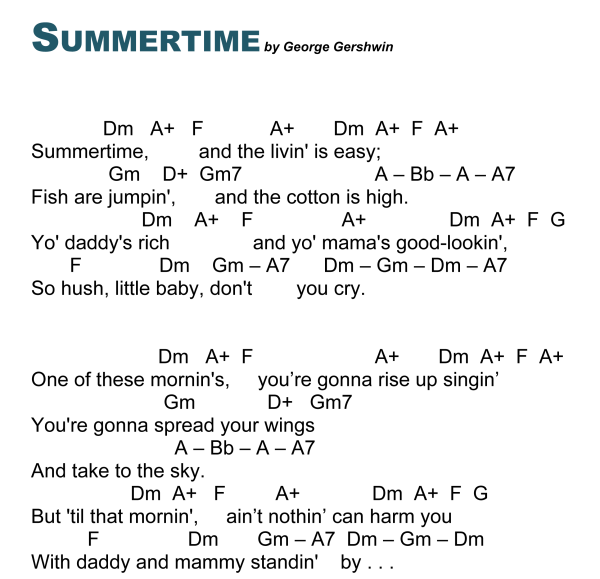
SUMMERTIME . . . . A Gershwin classic for the ukulele
PLEASE NOTE: My “UKULELE BASICS” DVD is currently available for purchase. . . For more information email me at mike@ukulelemikelynch.com
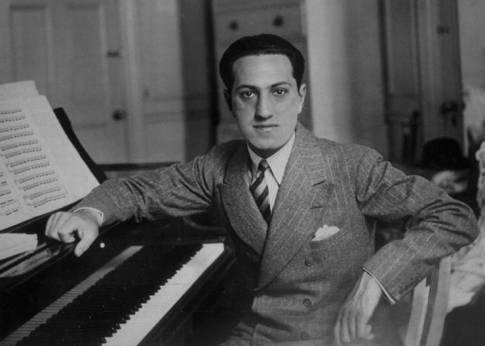
“SUMMERTIME” is one of the all time classics of George Gershwin and beyond that one of the all time classics of the 20th century. In doing some research on this song I discovered that Gershwin had composed this tune for the 1935 opera Porgy & Bess. . . Gershwin was always breaking down walls in his efforts to expand jazz and blend elements with traditional western musical forms such as opera or his classic Rhapsody In Blue as a full fledged piano concerto in a jazz / classical style. Gershwin started writing “SUMMERTIME” in the winter of 1935 with hopes of writing it as a spiritual in the african american folk style. In his attempt to write it as a folk song he chose to use the 5 tone pentatonic scale. . . which is the scale used in BLUES. . . . A primary reason that Jazz and Blues artists have flocked to this song as a mainstay of their repertoire. In presenting this tutorial for the ukulele I’ve given it a jazz styling with the simple DOWN DOWN UP pattern that loops throughout the song. Make note that the first DOWN strum is held. This song also introduces an AUGMENTED CHORD. . . A+ it can also be notated as Aaug. . . . So enjoy the summer with this song and your uke. . . Take it out on a warm sunny day and sit with something cool to drink and enjoy. . . . Summertime and the livin’ is easy . . .
“HAPPY STRUMMING” – Mike Lynch
GEORGE GERSHWIN
GEORGIA ON MY MIND – by Seattle’s ‘own’ RAY CHARLES
PLEASE NOTE: My “UKULELE BASICS” DVD is currently available for purchase. . . For more information email me at mike@ukulelemikelynch.com
Ok, so perhaps not truly Seattle’s “OWN” seeing as how Ray Charles was born in Albany, Georgia in 1930, but in 1947 at the tender age of 17 Ray moved to Seattle to begin his music career. Here in Seattle, my hometown by the way, he met up with an equally young musician buy the name of Quincy Jones. Together they spawned their youthful careers right here in the local jazz clubs and other jazz venues. Today the jazz culture is more vibrant then ever and much of this is due to the oustanding jazz music instruction found in our local school programs. I was thrilled to do this You Tube video lesson as it gave me an opportunity to reveal the world of Jazz to the ukulele community. I’ve posted the song sheet below. . . Enjoy the rich and warm jazz chords. . . This is an absolutely perfect opportunity to enlarge our ukulele chord vocabulary. I’ve also tried to introduce a somewhat subtle jazz strum styling in this video. . . Have fun with it and let me know how it goes.
“HAPPY STRUMMING” – UKULELE MIKE LYNCH

WHEN YOU WISH UPON A STAR – The Cliff Edwards Story
PLEASE NOTE: My “UKULELE BASICS” DVD is currently available for purchase. . . For more information email me at mike@ukulelemikelynch.com

Cliff Edwards (June 14, 1895 – July 17, 1971), also known as “Ukelele Ike“, was an American singer and voice actor who enjoyed considerable popularity in the 1920s and early 1930s, specializing in jazzy renditions of pop standards and novelty tunes. He had a number-one hit with “Singin’ in the Rain” in 1929. He also did voices for animated cartoons later in his career, and is best known as the voice of Jiminy Cricket in Walt Disney‘s Pinocchio (1940).
This excerpt from Wikipedia just doesn’t do Cliff “Ukulele Ike” Edwards justice. Of course, not many knew who the voice behind Jiminy Cricket was nor that Ukulele Ike was actually Cliff Edwards, but his career in show businnes spanned well over more then have a decade. This article mentions that he debuted Singin’ In The Rain in 1929, but what it doesnt mention is that he soon became the mentor of such other great “crooners” as Bing Crosby and Dean Martin. Soon after the microphone was developed in the mid 20’s the crooners could actually get up close to a mic and do “their thing” Getting that soft, buttery, mellow sound was only achievable thru modern amplification and Ukulele Ike or Cliff Edwards had JUST the right voice for that. Go to You Tube and listen to HIS rendition of When You Wish Upon A Star. It will definitely transport so many of us back to a bye gone era when things seemed so much more innocent and simple. His styling of this song is pure classic and one never forgets the sweetness of that voice. Hope you enjoy learning this on your ukulele. . . Have fun and DO keep making those wishes and having those dreams. . . “HAPPY STRUMMING” – UKULELE MIKE
P.S. Notice the resemblance between UKULELE IKE & JIMINY CRICKET ?? Trust me it’s NOT coincidental.

WHEN YOU WISH UPON A STAR SONGSHEET
Oh and if you’re interested in seeing a great documenary on Cliff Edwards check out this You Tube video: http://www.youtube.com/watch?v=6omeanjaweA
 UKULELE MIKE LYNCH - All things UKULELE