
This Chord/Melody arrangement utilizes lots of “Chromatic” shifts. . . Compositionally, they are what give it that distinctive “Russian” sound.

Chromatic merely means moving up or down by half steps . . . We encounter the very first upward Chromatic shift in the 2nd measure at the opening of the piece. . . Its the B chord shifting to the C chord between the second and third measures. Nothing too terribly difficult here . . . just let those shifting notes ring out to fill the air with a hint of cold, winter Russian folk melodies . .
Here is yet another excerpt from later in the piece . . .

Note the Barre chords on measures 46 and 47. At 46 we Barre the 3rd fret with our index finger while the little finger plays the 6th fret on the first string. Then, it shifts up by 2 frets so that the index finger is now barring the 7th fret and the little finger is on the 8th fret. These barre chords may take a little practice to get them clean and smooth sounding.
“Somewhere My Love” is contained in the Chord Melody eBook ONE . . . It can be purchased by making a payment of just $20.00 through the paypal button on the Ukulele Mike website: http://www.ukulelemikelynch.com Once purchased, it will be personally emailed to you within the day. . .

Table of Contents of the Chord Melody eBook ONE
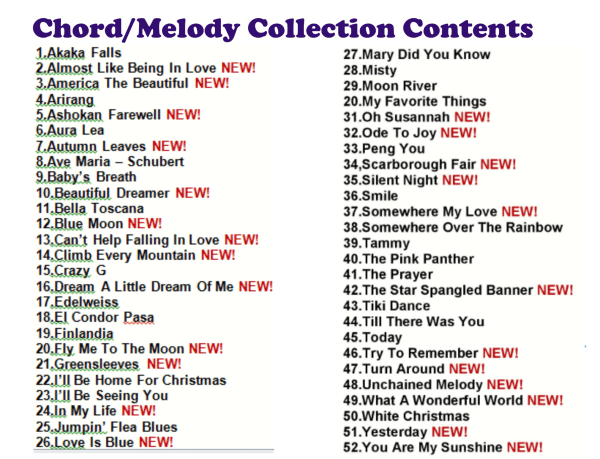
All three of the chord melody eBooks can be purchased individually for just $20.00 or as a whole at a combined discount of just $50.00 . . .

Announcing the release of the NEW Chord melody ebook FOUR $25.95


All 4 of the Chord melody ebooks can be purchased by making a discount payment of $70.00

Any questions regarding any Ukulele resource, please email: TheUkuleleMan2012@hotmail.com

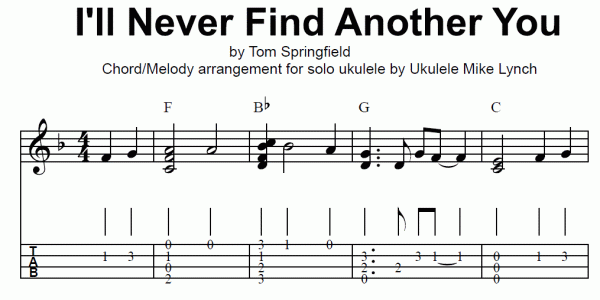
Below is a short excerpt from the opening of “I’ll Never Find Another You”.
Here is yet another short excerpt from I’ll Never Find Another You”
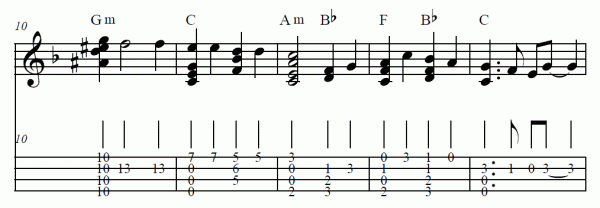
Note at measure 10 we need to Barre the 10th fret. . . with the ring finger extending up to the 13th fret of the 2nd string. This is probably the most difficult element in this arrangement . . . So be patient with yourself . . . You are definitely up in the higher stratosphere of the fingerboard. “I’ll Never Find Another You” is contained in the Chord/Melody eBook THREE. . . It can be purchased by making a payment of just $20.00 through the paypal button on the Ukulele Mike website: http://www.ukulelemikelynch.com Once purchased it will be emailed to you within the day

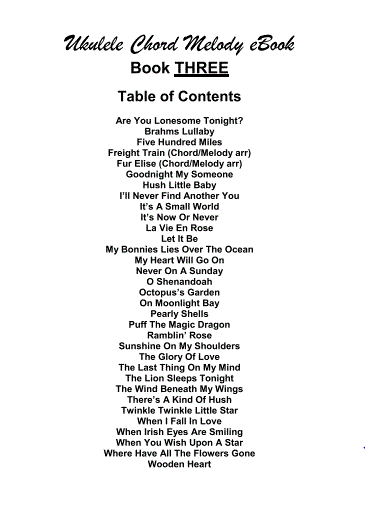
You can purchase each of the Chord/Melody eBooks individually for just $20.00 or all together at a new combo “TRILOGY” discount of just $50.00

NOW . . . . Chord/Melody eBook FOUR – $25.95

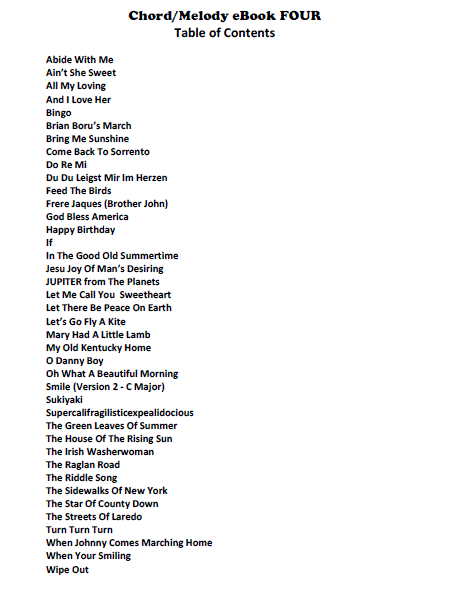

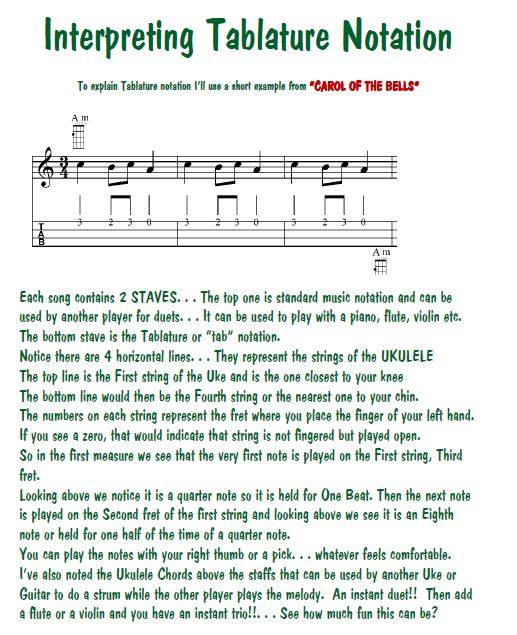
Questions regarding any Ukulele resources, please email TheUkuleleMan2012@hotmail.com

I chose to arrange this piece in the Chord/Melody format. . . Easiest way to perform solo Ukulele songs. . . Only the thumb is used to strum the chords. . . no fingerpicking is involved. Below is a short excerpt from the opening of “A Time For Us”
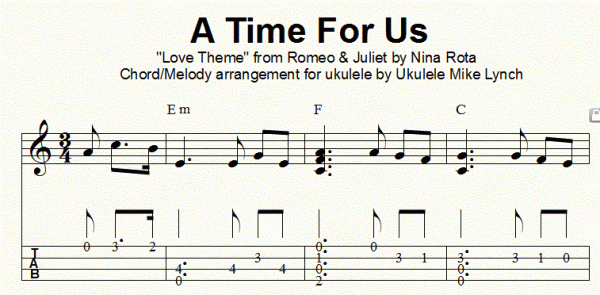
Be very careful in performing Chord/Melody pieces to follow closely where the melody goes. . .In the above excerpt, the melody starts on the First string then quickly drops to the Third string. . . Then by the 3rd measure it’s back up to the First string again. So be careful not to play the strings above the melody note. . . This is quite different from normal rhythm chord accompaniment for song where you would typically play all 4 strings all of the time . .
Below is another short excerpt from you to try. . .

There is very little Barring in this arrangement. . . You will see a need to barre the 5th fret at measure 8. You then place your ring finger or little finger over on the 7th fret of the 4th string.
“A Time For Us” is contained in the Chord/Melody eBook TWO – just $20.00 It can be purchased by making a payment through the paypal button on the Ukulele Mike website: http://www.ukulelemikelynch.com Once purchased, it will be personally emailed to you within the day.

TABLE OF CONTENTS:
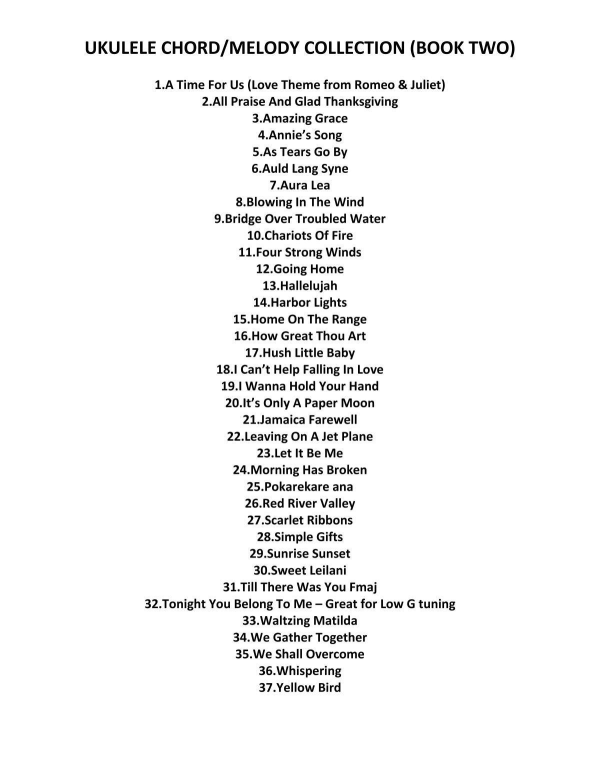
Any of the 3 Current Chord/Melody eBooks can be purchased individually for just $20.00 or all together at a new “TRILOGY” combo discount of jusAt $50.00

Announcing the release of the NEW Chord melody ebook FOUR $25.95


All 4 of the Chord melody ebooks can be purchased at a combo discount price of $70
Ukulele Mike says that Chord Melody format is the way to go with solo ukulele performance . . .

Questions regarding any ukulele resource, please email: TheUkuleleMan2012@hotmail.com

Original recorded performance by the Rolling Stones
Each of the THREE current collections in the Chord/Melody series have pieces ranging from easy to more challenging. . “As Tears Go By” is a perfect piece for beginning tablature and Chord/Melody players. As in all Chord/Melody pieces it requires only the thumb to do the strumming. . . No fingerpicking is involved. . . This piece, however, has no barre chords. . . So, even the left hand fingering is quite easy. Below is a short excerpt from the beginning of the song . . .

Note that the melody actually begins on the 2nd beat of the first measure. The open 4th string on the first beat is primarily just a “placer” note to establish the rhythm. Don’t let that note throw you off from the melody. As in many many chord melody pieces, you will often only be playing single note melodies interspersed with Chords. . . This song is a prime example of that.
Below is another short excerpt:
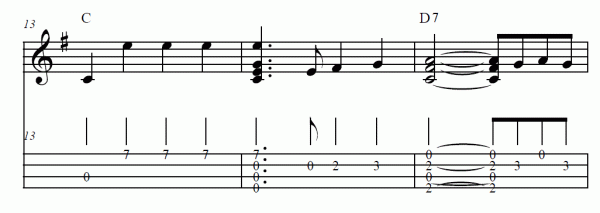
“As Tears Go By” is contained in the Chord/Melody eBook TWO and can be purchased by making a payment of just $20.00 through the paypal button on the Ukulele Mike website: http://www.ukulelemikelynch.com Once purchased, it will be personally emailed to you within the day. . .
Full table of contents:
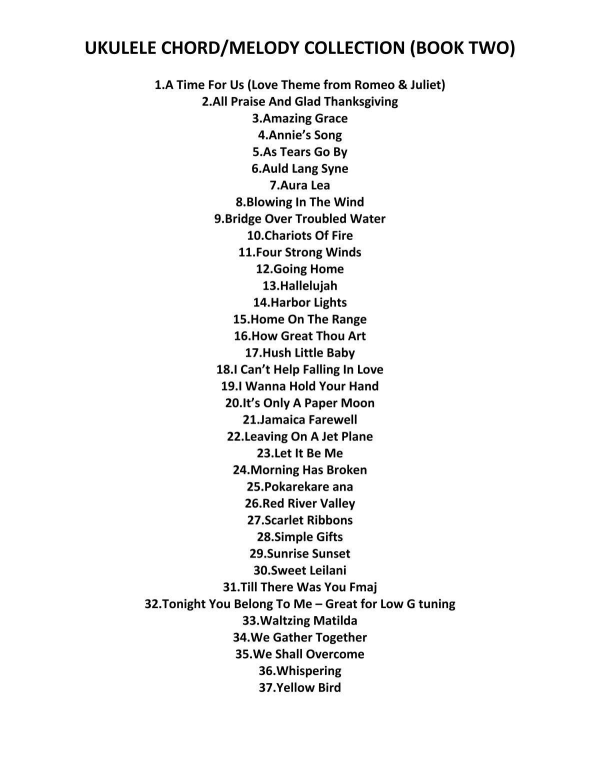
All three of the eBooks can be purchased individually for just $20.00 or all together at a new combined discount of just $50.00.

All 4 of the Chord melody ebooks can be purchased at a combo discount of $70
Questions regarding any Ukulele resource, please email: TheUkuleleMan2012@hotmail.com
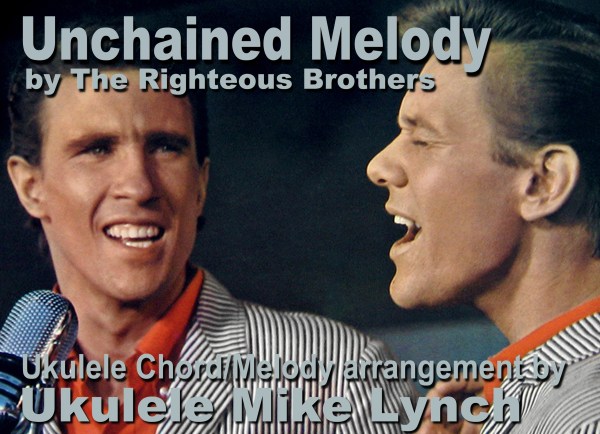
Below is a short excerpt from the opening of “Unchained Melody”

Make note that the melody begins on the first string then jumps over to the 2nd string on measure 3. . . Stays on the 2nd string then jumps back up to the 1st string on beat 2 of the 4th measure. . . . Therefore, be careful not to play the first string whenever the melody jumps to another string. . . This is one of the primary differences between chordal strumming to accompany singing and that of solo ukulele instrumental playing. . . This takes some time and patience to get used to this . . .
Notice, as well, that this entire piece is played with merely the thumb throughout
Below is another short excerpt from later on in the song:
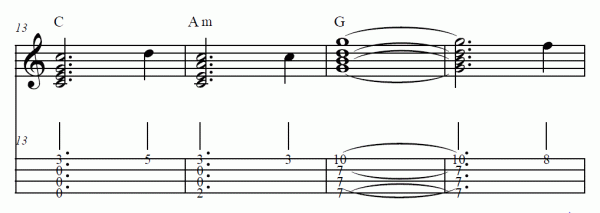
Notice at measure 15 we have a G chord. . . However, this G chord is an upper fingerboard inversion. . . It requires barring the 7th fret with the index finger while the little finger stretches up to play the 10th fret. . . Upper fingerboard inversions are entirely common in solo instrumental playing, both in fingerpicking style as well as chord melody style.
Here is, yet again, another excerpt from later on in the piece .

“Unchained Melody” is contained in the Chord/Melody eBook ONE. It can be purchased by making a payment of just $20.00 through the paypal button on the Ukulele Mike website: http://www.ukulelemikelynch.com Once purchased, it will be personally emailed to you within the day.
The Chord/Melody collections can all be purchased individually for just $20.00 or all together at a new combined “TRILOGY” discount of just $50.00
Announcing the NEW Chord melody ebook FOUR $25,95

All 4 of the Chord melody ebooks can be purchased at a combo discount of $70
Questions regarding any Ukulele resource, please email: TheUkuleleMan2012@hotmail.com
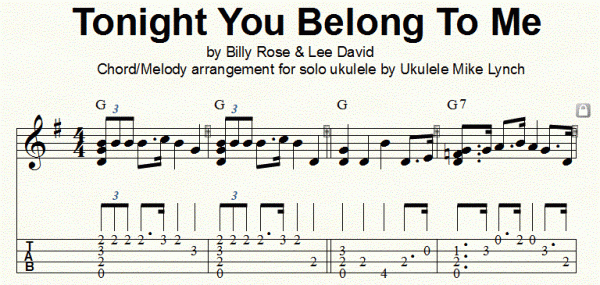
A brief excerpt from the opening of Tonight You Belong To Me . . .
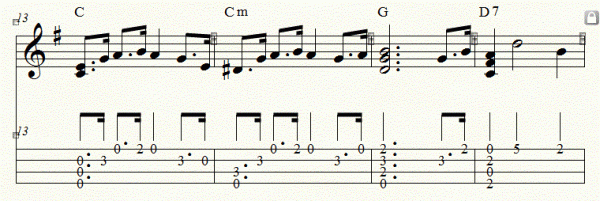
Another short excerpt . . .
Yet, again, another excerpt . . .
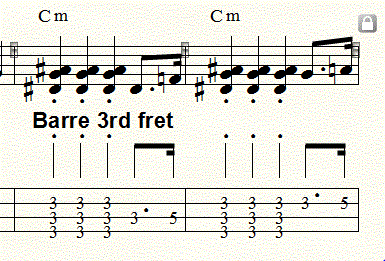
Notice above, the staccato markings under the first 3 beats of each measure . . . I will be covering this technique is an upcoming You Tube video tutorial soon . . .
“Tonight You Belong To Me” is contained in the Chord/Melody eBook TWO . . . It can be purchased by making a now reduced payment of $20.00 through the paypal button on the Ukulele Mike website: http://www.ukulelemikelynch.com
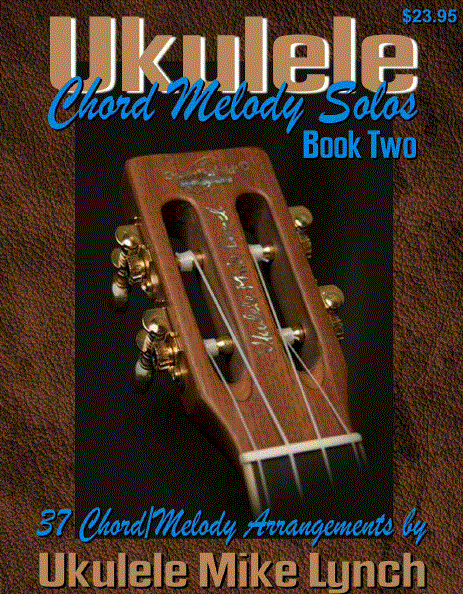
Currently I have 3 Chord/Melody collections . . They can be purchased individually or all together at a combined discount. . . Once purchased, they will be personally emailed to you within the day . . .

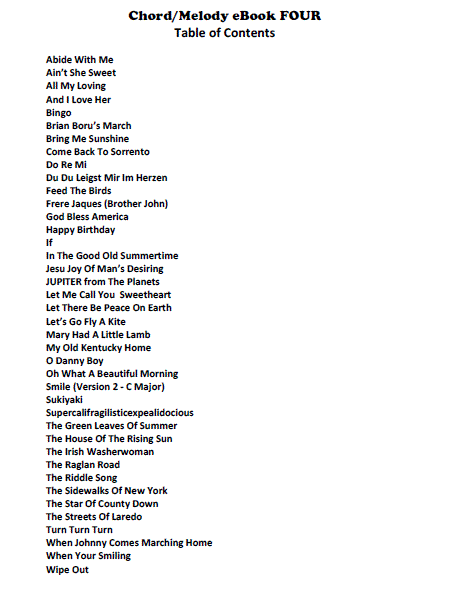
NEWS UPDATE! Now happy to announce the new Chord Melody ebook FOUR $25.95

All inquiries regarding any Ukulele resources, please email: TheUkuleleMan2012@hotmail.com
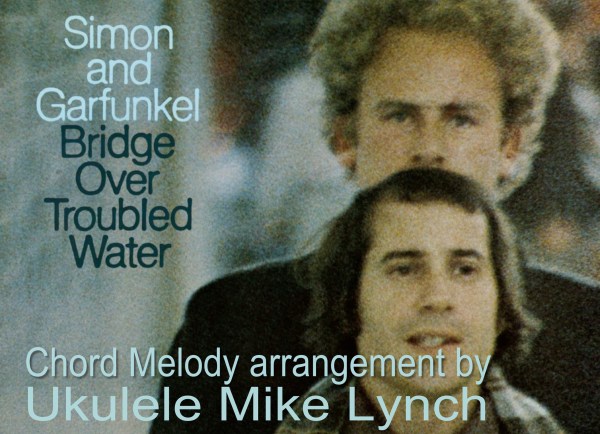
“Bridge Over Troubled Water” as sung by Simon & Garfunkel
We learn from WIKIPEDIA that “Bridge over Troubled Water” is a song by American music duo Simon & Garfunkel from their fifth studio album, Bridge over Troubled Water (1970). Produced by the duo themselves and Roy Halee, the song was released as the follow-up single to “The Boxer” on January 26, 1970. Composed by singer-songwriter Paul Simon, the song is performed on piano and carries the influence of gospel music. The original studio recording employs elements of Phil Spector‘s “Wall of Sound” technique using L.A. session musicians from the Wrecking Crew.
It was the last song recorded for their fifth and final album, but the first fully completed. The song’s instrumentation was recorded in California while the duo’s vocals were cut in New York. Simon felt his partner, Art Garfunkel, should sing the song solo, an invitation Garfunkel initially declined. Session musician Larry Knechtel performs piano on the song, with Joe Osborn playing bass guitar and Hal Blaine closing out the song with drums. The song won five awards at the 13th Annual Grammy Awards in 1971, including Grammy Award for Record of the Year and Song of the Year.
The song became Simon & Garfunkel’s biggest hit single, and it is often considered their signature song. It was a number one hit on the Billboard Hot 100 for six weeks, and it also topped the charts in the United Kingdom, Canada, France, and New Zealand. It was a top five hit in eight other countries as well, eventually selling over six million copies worldwide, making it among the best-selling singles. It became one of the most performed songs of the twentieth century, with over 50 artists, among them Elvis Presley and Aretha Franklin, covering the song. It was ranked number 48 on Rolling Stone’s 500 Greatest Songs of All Time.
“Bridge over Troubled Water” was composed by Paul Simon very quickly, so much so that he asked himself, “Where did that come from? It doesn’t seem like me.” The chorus lyrics were partly inspired by Claude Jeter‘s line “I’ll be your bridge over deep water if you trust in me,” which Jeter sang with his group, the Swan Silvertones, in the 1958 song “Mary Don’t You Weep.” According to gospel producer and historian Anthony Heilbut, Simon later acknowledged his musical debt to Jeter in person, and additionally handed Jeter a check as compensation. Simon wrote the song initially on guitar, but decided to transpose it to the piano, to both better reflect the gospel influence and to suit Garfunkel’s voice.
When Simon showed the song to his partner, he informed him that he felt Garfunkel should sing it by himself, the “white choirboy way.” Garfunkel declined, feeling it was not right for him and believing that Simon should sing it. Garfunkel reportedly liked Simon’s falsetto on the demo and suggested that Simon sing. He and producer Roy Halee also thought the song needed three verses and a ‘bigger’ sound towards the end. Simon agreed and penned the final verse, though he felt it was less than fully cohesive with the earlier verses. The final verse was written about Simon’s then-wife Peggy Harper, who had noticed her first gray hairs (“Sail on, silvergirl”). It does not refer to a drug abuser’s hypodermic needle, as is sometimes claimed. The verse was Garfunkel’s idea, and Simon has never cared for it.
“Bridge over Troubled Water” was the final track to be recorded but the first one fully completed, with an additional two weeks of post-production. Simon initially composed the song in G major, but arranger and composer Jimmie Haskell transposed the song to E-flat major to suit Garfunkel’s voice. The song was recorded in California, to make it easier for Garfunkel to go to Mexico to film Catch-22. Simon wanted a gospel piano sound, and so he hired session musician Larry Knechtel. The song was initially two verses long, but Garfunkel felt the song was too short, and asked Knechtel to play a third verse, to which Simon would write more lyrics. Joe Osborn played the two bass guitars, one high and the other low. A horn section rounded off the song. The drums were played in an echo chamber to achieve a hall effect. Due to a series of factors, the duo had to work on a new tape; an arranger falsely labeled the song as “Like a Pitcher of Water”, wrote Garfunkel’s name incorrectly and the string part was unsatisfactory.]
Simon and Garfunkel then returned to New York to record the vocals. The vocal style in “Bridge over Troubled Water” was inspired by Phil Spector‘s technique in “Old Man River” by The Righteous Brothers. After two months the song was finalized. Simon himself admitted that it sounded like the Beatles‘ “Let It Be“, stating in an Rolling Stone interview: “They are very similar songs, certainly in instrumentation …”
As their relations frayed preceding their 1970 breakup, Simon began to feel jealous that he allowed Garfunkel to sing it solo:
He felt I should have done it, and many times on a stage, though, when I’d be sitting off to the side and Larry Knechtel would be playing the piano and Artie would be singing “Bridge”, people would stomp and cheer when it was over, and I would think, “That’s my song, man…”
As I began to conceive an arrangement for the simple little instrument the UKULELE . . . this song seemed at first to be a towering icon of music and I wasn’t entirely sure would carry well with the Ukulele . . . However, after working and living with it over several days . . . I began to see how the uke could reveal a softer, gentler and more intimate sound that truly did reflect, I believe, the intention of Paul Simon. . . I hope you might find this arrangement worthy. . .
Below is a short excerpt from the opening of the song . . .

Make note that low melody line at the beginning calls for us to play most of it on the 2nd string. . . So, make sure you don’t play the first string in these opening measures. . .Don’t worry the melody eventually jumps up to the First string and the chords become larger and much fuller . . . Below is another excerpt from later in the song where the chords to get much fuller and very delicious sounding . . .

Notice the D7 chord in the second measure. . . It’s not your typical D7 . . It is what we call a higher inversion form of the D7 chord. To play this chord, you will need to Barre the Fifth Fret . . then place the middle finger on the Sixth Fret of the Third string.
In like manner, in the next measure you will play the E7 the same way but moved up to the 7th Fret. . . Place the middle finger on the 8th Fret of the Third string.
This arrangement of “Bridge Over Troubled Water” is contained in the Chord/Melody eBook TWO. .. It can be purchased by making a payment of just $20.00 through the paypal button on the Ukulele Mike website: http://www.ukulelemikelynch.com Once purchased, it will be emailed to you within the day.

Table of Contents for Chord/Melody eBook TWO . . .

Any of the currently available THREE Chord Melody collections can be purchased individually for just $20.00 or all together at a combined discount of just $50.00

Announcing the release of the NEW Chord melody ebook FOUR which can be purchased by making a payment of $25.95 through the paypal button on the Ukulele Mike website http://www.ukulelemikelynch.com Once purchased it will be personally emailed to you within the day.
All 4 of the Chord melody ebooks can be purchased at a combo discount price of $70
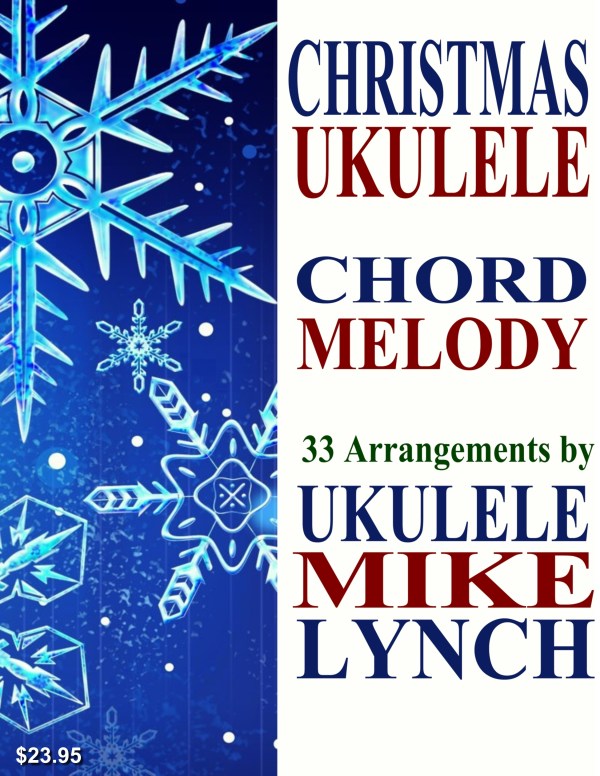
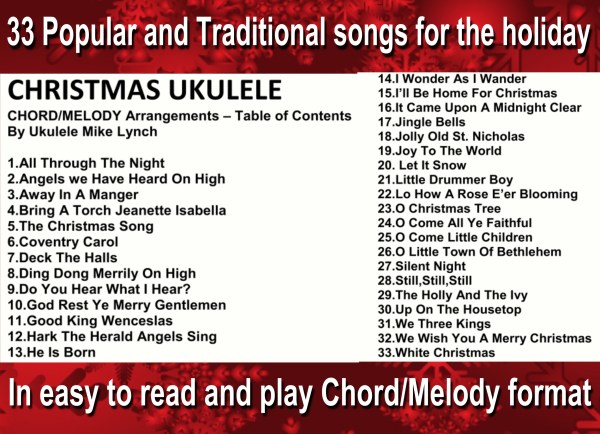
the CHRISTMAS CHORD MELODY EBOOK available for $23.95
Inquiries regarding any Ukulele resources, please email: TheUkuleleMan2012@hotmail.com

We learn from WIKIPEDIA that “Morning Has Broken” is a popular and well-known Christian hymn first published in 1931. It has words by English author Eleanor Farjeon and is set to a traditional Scottish Gaelic tune known as “Bunessan” (it shares this tune with the 19th century Christma s Carol “Child in the Manger”). It is often sung in children’s services. English pop musician and folk singer Cat Stevens (known as Yusuf Islam since 1978 after becoming a Muslim in 1977) included a version on his 1971 album Teaser and the Firecat. The song became identified with Stevens when it reached number six on the U.S. Billboard Hot 100 and number one on the U.S. easy listening chart in 1972.
Morning Has Broken” is definitely one of the most easily accessible pieces contained in the Chord Melody eBook TWO. . . As in all Chord Melody arrangements it involves simply the right thumb brushing the chords and the melody automatically plays itself. No really difficult left hand fingering in this arrangement. . . Look below to see a short excerpt from the beginning of this song. . .

Notice in measure 3 we have a Dm chord. . . This is an upper fret inversion of the chord and does require a simple Barre fingering. Simply lay the index finger across the first 3 strings at the 5th Fret. . . Then bring the ring finger over to play the 7th Fret of the 4th string. Below is another short excerpt. . .

The majority of the time the melody is on the first string but in some cases the melody will jump over to the 2nd or even the 3rd string. Notice above in Meas 15 that the melody does immediately jump to the 2nd string then down to the 3rd string. . In these cases you need to be careful not to play the 1st string. This is chiefly where solo instrumental playing differs widely from simply chord and strum for singing where you always play all 4 strings. It does require some care and attentive practice. Learning to play solo while learning to interpret tablature notation does take some time but be patient with yourself. It will happen and soon you will find yourself in a whole new world of music fun with the Ukulele.
As I mentioned earlier, “Morning Has Broken” is contained in the Chord/Melody eBook TWO. It can be purchased by making a payment of just $20.00 through the PayPal button on the Ukulele Mike website: http://www.ukulelemikelynch.com Once purchased it will be personally emailed to you within the day.

Table of Contents of Chord Melody eBook TWO
Each of the Chord/Melody eBooks can be purchased separately for just $20.00 or all together at a new Combo “TRILOGY” discount of just $50.0

Here is a link detailing all THREE eBooks
Announcing the release of the NEW Chord melody ebook FOUR $25.95
All 4 Chord Melody ebooks can be purchased at a combo discount price of $70
For inquiries regarding any Ukulele resource please email: TheUkuleleMan2012@hotmail.com
Can be very effective with a thin guage pick

 YOU TUBE note by note video tutorial by Ukulele Mike Lynch
Here is a link to a detailed tutorial blog I did 3 years ago on El Condor Pasa . . .
https://allthingsukulele.com/2013/06/20/el-condor-pasa-arranged-for-ukulele-by-ukulele-mike-lynch/
The tablature for “El Condor Pasa” is contained in the massive 52 song Chord/Melody eBook ONE in the Ukulele Mike Chord/Melody series . . . It can be purchased by making a payment of $29.95 through the paypal button on the Ukulele Mike website: http://www.ukulelemikelynch.com . . . Once purchased it will be emailed to you within the day.
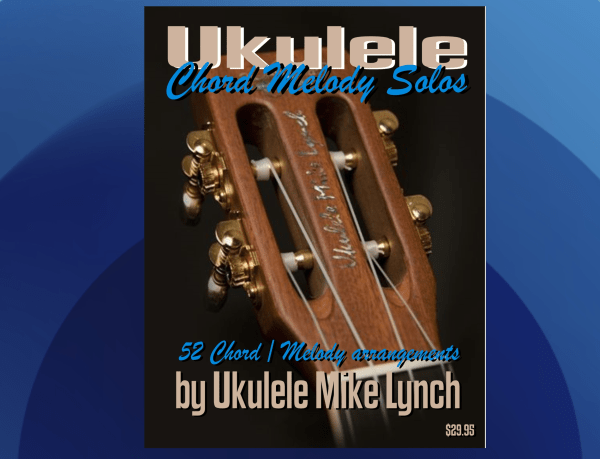 Below are the full contents of the 52 song Chord/Melody collection
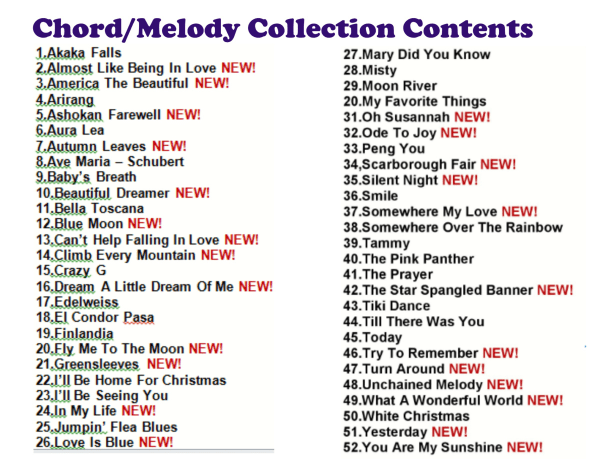 This collection one of three collections within the current Ukulele Mike Chord/Melody series. Each eBook can be purchased individually or all together for a combo discount.
For inquiries regarding any Ukulele resource, please email: TheUkuleleMan2012@hotmail.com

Let It Be” is a song by the Beatles, released in March 1970 as a single, and (in an alternate mix) as the title track of their album Let It Be. At the time, it had the highest debut on the Billboard Hot 100, reaching number 6. It was written and sung by Paul McCartney. It was their final single before McCartney announced his departure from the band. Both the Let It Be album and the US single “The Long and Winding Road” were released after McCartney’s announced departure from and subsequent break-up of the group.
The alternate mix on their album “Let It Be” features an additional guitar solo and some minor differences in the orchestral sections.
In 1987, the song was recorded by charity supergroup Ferry Aid (which included McCartney). It reached number 1 on the UK Singles Chart for three weeks and reached the top ten in many other European countries. McCartney said he had the idea of “Let It Be” after he had a dream about his mother during the tense period surrounding the sessions for The Beatles (“the White Album”) in 1968. According to McCartney, the song’s reference to “Mother Mary” was not a biblical reference. The phrase has at times been used as a reference to the Virgin Mary, the mother of Jesus Christ; in fact, the words “let it be” are a direct quote from the Prayer of the Annunciation, Mary’s response to the Angel Gabriel in Luke 1.38. Nevertheless, McCartney explained that his mother – who died of cancer when he was fourteen – was the inspiration for the “Mother Mary” lyric. He later said: “It was great to visit with her again. I felt very blessed to have that dream. So that got me writing ‘Let It Be’. He also said in a later interview about the dream that his mother had told him, “It will be all right, just let it be. When asked if the song referred to the Virgin Mary, McCartney has typically answered the question by assuring his fans that they can interpret the song however they would like.
As I approached the arranging process for this piece, it was early on very evident to me that the Chord/Melody style was the best. This style of arrangement and performance is so cool because you have the mix of chordal harmony with melody but you only need to set the fingers on the correct frets and strings and merely brush the strings with the thumb. The melody automatically presents itself as the highest note of the chord. Since there are many times when the melody jumps from the First string to the Second or even in some cases, the Third that you need to be careful not to play the higher strings. . . You can only play the 2 or 3 strings necessary to play the chord with melody. At first, this may seem strange to those who have for long only strummed rhythm to accompany songs. . . But in this case, the Ukulele does the singing for you. This is truly SOLO playing. . . We are treating the ukulele as a full Chordal / Melody instrument on its own. Becoming skilled at this and at reading the tablature notation may take some time and lots of patience, but the payoff is worth it. . .
Below is a short excerpt from the opening measures of “Let It Be”
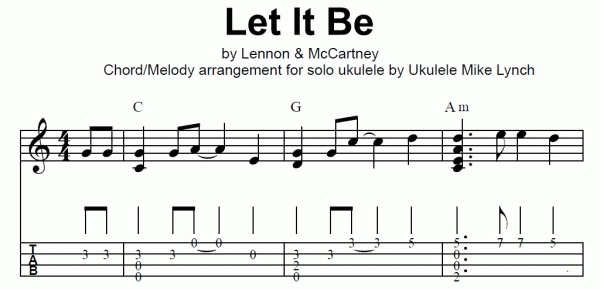
Notice how the melody rides on the 2nd string at the beginning . . . This is a prime example of how ou need to be careful so as to avoid hitting the 1st string. . . On the second halve of the second beat of the first full measure it finally jump up to the first string. . . . Often times in Chord/Melody playing you will only be playing a single note on a single string between the chordal moments. . . This is quite typical.
Here is yet another excerpt from later in the song
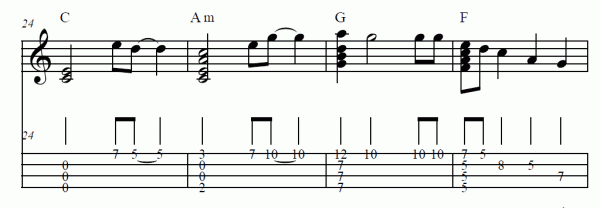
Notice at the 26th measure we have a G chord. . . looks quite different from a typical G chord on the Uke, doesn’t it? We play it by barring the 7th fret with the index finger and placing the little finger up on the 12th Fret. At measure 27 we have an F chord. . . Looks quite unlike a typical F chord, but it is . . . These are examples of what are called upper register inversions of these chords. The inversions are essential to Chord/Melody style as they allow us to play upper fingerboard melodies along with their appropriate chords. . . Again, that F chord is played by barring the 5th Fret and placing the little finger on the 7th Fret.

“Let It Be” is contained in the Chord/Melody eBook THREE and can be purchased by making a payment of just $20.00 through the paypal button on the Ukulele Mike website: http://www.ukulelemikelynch.com Once purchased, it will be personally emailed to you within the day.
All THREE of the current Chord Melody eBooks can be purchased individually or all together at the new “TRILOGY” combined discount of just $50.00

Announcing the NEW Chord melody ebook FOUR $25.95
All 4 of the Chord melody ebooks can be purchased at a combo discount of $70
For inquiries regarding any Ukulele resources please email: TheUkuleleMan2012@hotmail.com
 UKULELE MIKE LYNCH - All things UKULELE