
Click below to audition VIMEO video of I’LL BE SEEING YOU
I’ll Be Seeing You – Ukulele Solo Arrangement by Ukulele Mike Lynch
“I’ll Be Seeing You” is a popular song, with music by Sammy Fain and lyrics by Irving Kahal. Published in 1938, the song was inserted into the Broadway musical Right This Way, which closed after fifteen performances. In the musical, it was performed by the singer Tamara Drasin, who had a few years earlier introduced Smoke Gets In Your Eyes. The song is a jazz standard, and has been covered by many musicians. The musical theme has emotional power, and was much loved during World War II, when it became an anthem for those serving overseas (both British and American soldiers).
Once again, I decided to arrange this piece as a Chord/Melody piece. I also chose the key of F since that key works so well for the ukulele in general but particularly for Chord/Melody pieces. If you are considering doing your own Chord/Melody arrangements try the key of F first. It allows for both low, mid and high ranges with fairly accessible chord fingerings except of course the dreaded Bb. Once again, another great reason to learn the Bb chord. Remember to softly roll each chord to give it a fuller, warmer sound. Take a look at the first clip below to see what I mean.

This song uses some wonderfully delicious sounding jazz chords. See the clip below that illustrates that. Chords such as maj7 min7 dim7 aug min6 6th an 9th chords belong to the Jazz family of chords. I’m playing this tune with a low G tuning. That low G gives these Jazz chords a nice warm deep bottom end.

In the Fmaj7 chord above note that you need to barre the 5th fret with your index finger while holding down the 7th fret on the first string.

This song is included in the Chord Melody ebook ONE Which can be purchased by making a payment of $20.00 through the paypal button on the Ukulele Mike website http://www.ukulelemikelynch.com Once purchased it will be personally emailed to you within the day.

Table of Contents

I also have plenty of tablature notated arrangements in my large UKULELE SOLO INSTRUMENTAL eBook 2013 Enlarged edition. It also sells for $20.00 . . . . I have numerous newer pieces yet to be compiled into a collection and you can see videos on either You Tube or VIMEO of those pieces.
And now . . . a complete video performance by Ukulele Mike Lynch of I’LL BE SEEING YOU
Each of the Chord/Melody eBooks can be purchased separately for just $20.00. Or all together at a new combined “TRILOGY” discount of just $50.00



All 4 of the Chord melody ebooks can be purchased at a combo discount price of $70.

For information regarding any ukulele product please email:TheUkuleleMan2012@hotmail.com
In the Solo Fingerpicking eBook – – – – -AMAZING GRACE – Classic hymn arranged for solo ukulele by Ukulele Mike Lynch

According to Wikipedia “Amazing Grace” is a Christian hymn with words written by the English poet and clergyman John Newton (1725–1807), published in 1779. With the message that forgiveness and redemption are possible regardless of sins committed and that the soul can be delivered from despair through the mercy of God, “Amazing Grace” is one of the most recognizable songs in the English-speaking world.
Newton wrote the words from personal experience. He grew up without any particular religious conviction, but his life’s path was formed by a variety of twists and coincidences that were often put into motion by his recalcitrant insubordination. He was pressed (forced into service involuntarily) into the Royal Navy, and after leaving the service became involved in the Atlantic slave trade. In 1748, a violent storm battered his vessel so severely that he called out to God for mercy, a moment that marked his spiritual conversion. However, he continued his slave trading career until 1754 or 1755, when he ended his seafaring altogether and began studying Christian theology.
Below is a performance I did of my ukulele solo arrangement on You Tube several years ago:
In arranging this hymn for ukulele I chose to use an arpeggio finger picking style. The musical term “arpeggio” is of course derived from Italian as most musical terms are. It simply indicates that you take a chord and break it up into individual notes running them in some sort of rhythmic or even non rhythmic sequence. This gives is a distinctive “harp” like effect. Since the ukulele is basically limited to only 4 strings, I highly suggest using only the thumb, index and middle fingers to do the arpeggio or finger picking notes. I usually suggest using the thumb on the 4th and 3rd strings. . . Using the index finger on the 2nd string and the middle finger on the 1st string. Take a look at the short clip below of the opening measures of Amazing Grace.
Amazing Grace example 1

I might add that all of the chords throughout this piece are to be softly rolled. That gives them a broader more elegant feel rather than just picking the notes simultaneously. I start with the thumb and work toward the middle finger.
The full tablature of Amazing Grace is contained in the UKULELE SOLO INSTRUMENTAL eBook 2013 enlarged edition. . . Below is a You Tube video with an explanation of it’s contents.
Note, I also offer my Chord/Melody series. . . Each eBook can be purchased individually or as a Tri Pak at a discount

For inquiries about any Ukulele resource, please email Ukulele Mike at TheUkuleleMan2012@hotmail.com

“Smile” is a song based on an instrumental theme used in the soundtrack for the 1936 Charlie Chaplin movie Modern Times. Chaplin composed the music, while John Turner and Geoffrey Parsons added the lyrics and title in 1954.In the lyrics, based on lines and themes from the film, the singer is telling the listener to cheer up and that there is always a bright tomorrow, just as long as they smile. “Smile” has become a popular standard since its original use in Chaplin’s film.
This song has always had a special place in my musical soul. There is just something so universal about its message and the elegant, simple melody that came from the creative genius of Charlie Chaplin perfectly matches the lyrical sentiments. I had great joy in arranging this for solo ukulele. I decided to do it in a simple chord/melody fashion and I think this approach fits the song just right. Play with thumb throughout. I wrote this arrangement to be accessible to even beginning instrumental ukulele players so this is an ideal song for everyone. Teachers of ukulele might want to use this to introduce the subject of chord/melody. Below is the tablature for this song. . . My gift to all in the global ukulele community.
Enjoy and happy strumming . . . Ukulele Mike Lynch
CLICK HERE FOR FREE TABLATURE OF “SMILE”
SMILE tablature for ukulele
I’m excited to announce that I’m inviting everyone to learn this tab and perform it on You Tube or Vimeo. Your performance will appear on one of my upcoming blogs . . . So download it now and HAPPY STRUMMING
Vimeo video of the SMILE ukulele performance by Ukulele Mike Lynch
Check out my blog regarding THE COMPLETE CATALOG OF SOLO UKULELE INSTRUMENTALS BY UKULELE MIKE LYNCH
THE COMPLETE CATALOG OF UKULELE MIKE LYNCH SOLO UKULELE INSTRUMENTALS
SMILE is typical of the arrangements in my new 52 song Chord/Melody eBook – $20.00
It can be purchased by making a payment through the paypal donate button on the Ukulele Mike Lynch website:
http://www.ukulelemikelynch.com
Once purchased, it will be personally emailed to you within the day.


Each of the Chord/Melody collections can be purchased separately or all together at a combined discount . . .


Questions regarding any Ukulele resource, please email: TheUkuleleMan2012@hotmail.com

“What a Wonderful World” is a song written by Bob Thiele (as “George Douglas”) and George David Weiss. It was first recorded by Louis Armstrong and released as a single in 1967. Thiele and Weiss were both prominent in the music world (Thiele as a producer and Weiss as a composer/performer). Armstrong’s recording was inducted in the Grammy Hall of Fame in 1999. The publishing for this song is controlled by Memory Lane Music Group, Carlin Music Corp., and Bug Music, Inc.
I really enjoyed arranging this piece for solo ukulele. I chose the Key of F as it is one of friendliest keys for solo ukulele compositions. Having said that, I must mention that one chord that is fairly essential for the Key of F is the Bb chord and this piece certainly has a lot of them. Since F is so important for ukulele playing its vitally important that ukulele players devote time to mastering this chord. DO NOT avoid the Bb. . . It does have some challenges but they can be overcome. Typically one would play the Bb by pressing down the first two strings at the first fret with the index finger, then place the middle finger one the 2nd fret of the 3rd string then place the 3rd finger on the 3rd fret of the 4th string. As the 2nd and 3rd fingers are place down they often tend to lift the index finger slightly off it’s mission of holding down firmly the first 2 strings. That in itself is an important exercise and one well worth spending time on. It’s important to keep the 2nd and 3rd strings from touching the 2nd string so remember to keep the wrist fairly dropped low to allow those fingers to nicely arch up over the top of the first 2 strings. Watch the latter part of the VIMEO video to get some visual pointers on this. At one point in the song there is a need for getting a high note on the 5th fret of the first string with the little finger so take a look at the tablature below to see how the first string is not fretted to allow for this.
Example 1
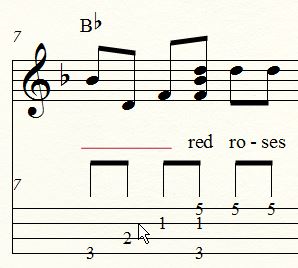
In the following clip notice the accents that are placed above the 1st and 4th beats of each measure. This should be adhered too throughout the piece.
Example 2

The C#6 chord is used in this piece. Do not be put off by the name. It’s actually a very simple chord. Merely barre the first 4 strings at the 1st fret. Remember the C6 chord is just the 4 strings played open, so barring it up one fret changes it to a C#6 chord. Notice all of the “1s” in the tablature clip before. Those are all held down as a barre chord at the first fret.
Example 3

Tablature available for purchase $5.39 thru the paypal donate button on the Ukulele Mike website: http://www.ukulelemikelynch.com
Looking for more Ukulele Solos? Get the SOLO UKULELE INSTRUMENTAL eBook 2013 enlarged edition $28.95. Can be purchased by paying through the paypal donate button on the Ukulele Mike website: http://www.ukulelemikelynch.com
Here is a youtube video illustrating what’s contained in the eBook.
Paperli.PaperFrame.Show({
domain: ‘ukulelemikegazette.com’,
pid: ‘3bb73148-1822-470b-8601-6915b2920625’
});
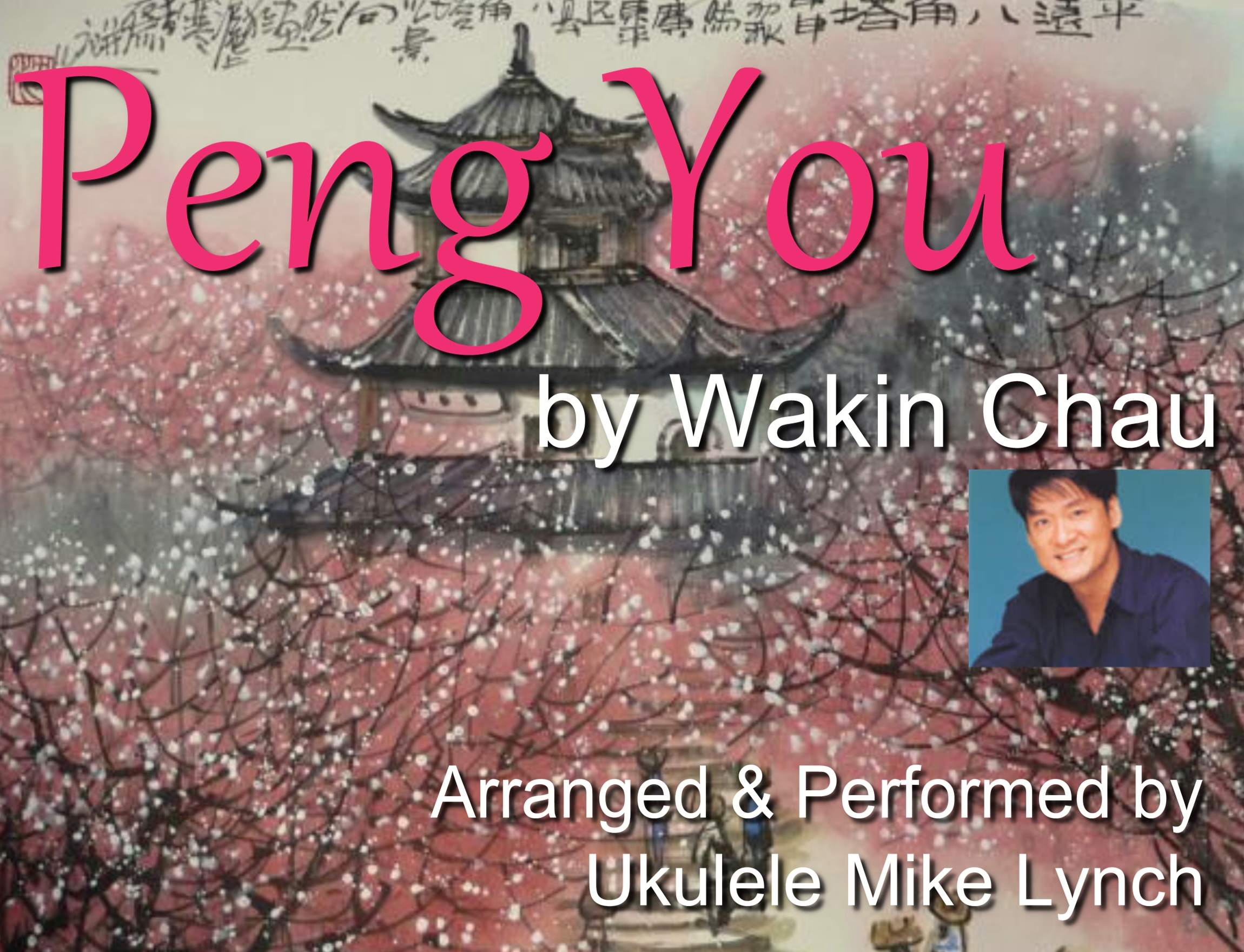
Wakin Chau (born 22 December 1960) is a Hong Kong-born Taiwanese singer and actor. Chau’s popularity has spread throughout Taiwan, Hong Kong, Mainland China, and parts of Southeast Asia. He was known as Emil Chau through the 1980s and 1990s, and by 2000 he reverted to his given name Wakin. As of August 2007, he has released more than 40 albums and held several international concert tours.
Below is a performance of my arrangement of this beautiful composition
This video was posted on VIMEO so I hope it works for your device
I totally loved working on this arrangement and found the melody and chord changes to be especially beautiful. I arranged it as a Chord/Melody piece and is to be played simply with downstrokes of the thumb. Most of it is played in the first position utilizing the first 3 frets but there is a section that goes up the neck and requires barring across the 5th fret. If you’re not adept at barring then this is a good opportunity to develop that into your technical skills. Barring opens up a whole new world of playing on the ukulele. Below is a clip that shows the section that goes up the neck. Notice the notation to Barre at the 5th fret.
PENG YOU EXAMPLE 1

This next clip shows the beginning of the piece. Note the double dotted line right after the first measure. That tells us to repeat from that point to the second and final ending.
PENG YOU EXAMPLE 2
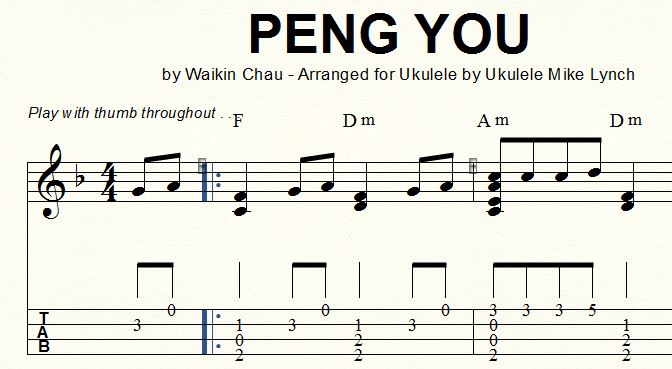
This final clip shows the double dotted line towards the end of the piece. The next measure begins the final ending. Reading music notation in any form whether it is standard treble or bass clef notation or tablature is just like reading a map. There are numerous and constant signs all along the way. They inform us as to the tempo (speed) dynamics (volume) position of fingers, and the order of the sections of the piece not to mention the notes that are played. The 4 horizontal lines indicate the strings of the ukulele with the top line being string ONE which is the string closest to the floor. The numbers on the lines (strings) indicate which frets are pressed down. Zeros, of course, mean the strings are played open. The tempo of the piece is to be kept moderate just like the video.
I composed and performed this piece on a Tenor ukulele with a LOW G tuning. I’ve played it numerous times on standard tuned ukes and it works just as well. I do like the lower G with this piece though as it lends the piece more bass end and mellowness.
PENG YOU EXAMPLE 3

Of course, my arrangement is for solo instrumental ukulele but the original song does have vocal lyrics. Below are the mandarin lyrics of Peng You.
Peng You (朋友)
这些年一个人
风也过雨也走
有过泪有过错
还记得坚持甚麽
真爱过才会懂
会寂寞会回首
终有梦终有你在心中
朋友一生一起走
那些日子不再有
一句话一辈子
一生情一杯酒
朋友不曾孤单过
一声朋友你会懂
还有伤还有痛
还要走还有我
And here is the English translation:
Friend 朋友
all these years, me alone
been through wind and walk through rain
had tears, had mistakes
When had i insist something?
only the one who had loved will understand
(sometimes) will be lonely, will regret
still have dream and you in my heart.
Friends walk together all lifetime
these days won’t come back
one sentence, one lifetime
one love, one cup of wine
Friends are never lonely
One word “ friend”, you will understand
still have wounds, still have pain
stll need to walk, you still have me
My arrangement of Peng You is contained in my Chord/Melody eBook ONE and can be purchased by making a payment of just $20.00 through the PayPal button on the Ukulele Mike website: http://www.ukulelemikelynch.com Once purchased It will be personally emailed to you within the day. . .

Full table of contents . . .
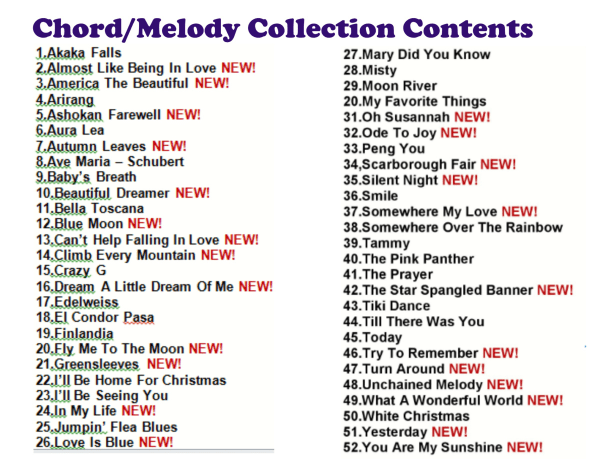
Each of the Chord/Melody collections can be purchased separately for just $20.00 or all together at a new Combo “TRILOGY” discount of just $50.00

All 4 of the Chord melody ebooks which comprise the QUARTET now on sale at a combo discount price of $70.

For any inquiries regarding Ukulele resources please email: TheUkuleleMan2012@hotmail.com
THE DAILY UKULELE GAZETTE – Editor: Ukulele Mike Lynch
Ukulele enthusiasts worldwide subscribe now to THE DAILY UKULELE GAZETTE

UpToDate news articles, videos, tutorials, product reviews and photos for ukulele enthusiasts worldwide. Promote World Peace, play the Ukulele.

Subscribe now and get your DAILY UKULELE GAZETTE delivered to you everyday . . . http://www.ukulelemikegazette.com
ARIRANG – Traditional Korean Folk Song – Arranged for ukulele by Ukulele Mike Lynch

“Arirang” (Korean: “아리랑”) is a Korean folk song, often considered the unofficial national anthem of Korea
Many versions of the song open by describing the travails the subject of the song encounters while crossing a mountain pass. “Arirang” is one name for the pass and hence the title of the song. Some versions of “Arirang” mention Mungyeong Saejae, which is the main mountain pass on the ancient Joseon Dynasty road between Seoul and southeastern Gyeongsang Province.
In December 2012, the song was inscribed on the Representative List of the Intangible Cultural Heritage of Humanity programme by UNESCO. This was followed by an announcement by the Cultural Heritage Administration of Korea of a five-year plan to promote and preserve the song. The plan is aim to support “Arirang” festivals by regional organizations, as well as building an archive for the song, exhibitions, fund research; of which it has allocated ₩33.6 billion.
The South Korean government designated Arirang as the official march of the U.S. Army’s 7th Infantry Division since 26 May 1956, after its service in Korea during the Korean War, though the official Division song was the “New Arirang March,” an American-style march arrangement of Arirang (the 7th Infantry Division is currently inactive; however, it will be reactivated as an administrative headquarters at Joint Base Lewis-McChord, Washington on October 1, 2012 to provide more oversight and guidance for the base’s five combat brigades.
On February 26, 2008, the New York Philharmonic performed Arirang for an encore during its unprecedented trip to North Korea
Below is a performance I did of my ukulele arrangement of ARIRANG
My arrangement for ukulele is known as a CHORD / MELODY arrangement. The chords are played simply by rolling the thumb from the 4th string to the 1st. As always, my playing style is to brush the strings up on the neck a bit rather than down by the sound hole or bridge. This gives it a fuller, warmer sound. I’ve placed a short snippet of the music below. The chord fingerings are actually given in the chord grids above each line. Simply hold those chords down while you brush the strings then play the single note melody. Alternating chord with melody throughout . . . Keep a slow languid feel throughout. Do not rush. Listen closely to the YOU TUBE video and once you have the tempo up try playing along with it.
ARIRANG TABLATURE EXAMPLE:

The Ukulele is EXTREMELY popular in Korea and a couple of years ago some young Korean university students created this video to thank me for my teaching. Imagine my surprise when I discovered it. I was and am honored by them and am so grateful that my teaching has reached all the way from the US to Korea. This is a perfect example of how music can bring peoples together, break down walls and create a world community of loving peace. I’ve posted it here for your enjoyment. . . Happy Strumming to you all . . .
Music for ARIRANG is included in my SOLO UKULELE INSTRUMENTAL eBook collection 2013 Enlarged edition. It can be purchased for $28.95 by paying through the paypal donate button on my website: http://www.ukulelemikelynch.com
Once purchased it will be emailed to you within the day. HAPPY STRUMMING!!!
For information regarding any ukulele product please email:
TheUkuleleMan2012@hotmail.com
I also have a complete library of Chord/Melody eBooks. They can be purchased separately or as a tri pak at discount

SONATA PATHETIQUE by Ludwig van Beethoven – A Ukulele interpretation by Ukulele Mike Lynch
Ludwig van Beethoven 1770 – 1827
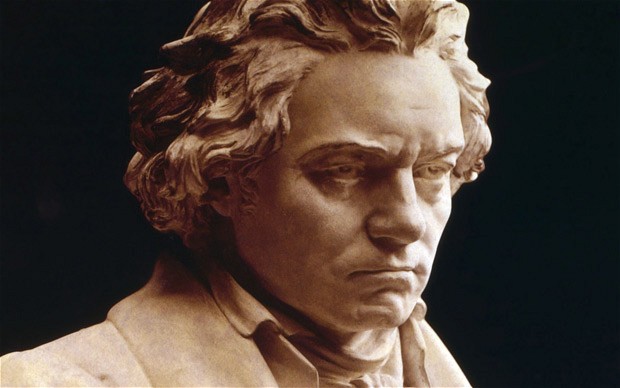
In 1798 Ludwig van Beethoven composed his Piano Sonata No 8 in C minor, Opus 13. It is commonly known as the Sonata Pathetique. Beethoven was only 27 years old when he wrote this classic piece and dedicated it to his friend Prince Karl von Lichnowsky. The Sonata form is typically written in what are called “movements” each movement being a distinctive piece with a distinctive character. The 2nd movement of the Sonata Pathetique is marked “Adagio cantabile” which indicates it is to be played slowly and spaciously. It is the melody of the Adagio movement that has come down to us over time to be a much loved piece of music that has been repeatedly performed, arranged and recorded by literally thousands of musicians. It has even been interpreted in a pop music form and disco. “This Night” is a modern song derivative by Billy Joel. Mr. Holland in the movie Mr. Holland’s Opus uses the modern interpretations of this piece to teach music appreciation to his high school students.
While on holiday at the ocean I was casually experimenting on my ukulele with some chord changes and before my very ears the melody combined with chords of the Adagio movement appeared. I was totally surprised at how easily it came. I was also surprised to find how very simple the chord progression was. It seems the greatest composition are deceptively simple. Such classic melodies as JOY TO THE WORLD by Handel is nothing more then a descending major scale.
I quickly came up with the CHORD/MELODY version of the Adagio movement and in no time I was off to composing the remaining 2 sections of my arrangement.
I’m always attempting to find what new things the ukulele can do and who would ever equate ukulele with Beethoven when for so many years the ukulele has been looked upon as just a toy or novelty instrument.
Here is my You Tube video tutorial of my arrangement:
Below is a short snippet of the CHORD/MELODY section of my arrangement.
EXAMPLE 1

Wherever you see fret numbers stacked on top of each other those are to be barred. I can’t over state the need to develop barring technique in your playing. It is essential especially if you wish to play solo instrumental pieces. The thumb is used exclusively throughout the CHORD/MELODY section and the chords are to be rolled as in a harp-like fashion. Rolling the chords gives the illusion of more strings or notes . . . giving the ukulele a fuller feel. In addition, rolling the notes compensates for the general lack of sustain in the ukulele by spreading out the sound over time. I usually like to play somewhat up on the neck to achieve a full, warm, sweet sound. By playing nearer the soundhole or bridge lends a brittle harder sound.
There are 2 more distinct sections to my arrangement of the Adagio movement from the Sonata Pathetique. The second section which is briefly shown below is in 8th notes and fingerpicked. Note below the snippet the indication of fingering for this section.
EXAMPLE 2

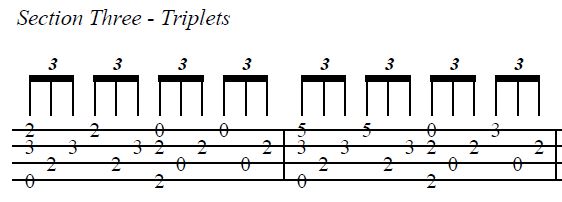
The third and final section of my arrangement for ukulele is in triplets. It is also fingerpicked and the fingering is the same as in the 2nd section.
EXAMPLE 3
My arrangement of the Beethoven Sonata Pathetique Adagio movement is included in my SOLO UKULELE INSTRUMENTALS 2013 Enlarged edition. It can be purchased for $28.95 by paying through the paypal donate button on my website: http://www.ukulelemikelynch.com
‘TILL THERE WAS YOU from THE MUSIC MAN – Arranged for Ukulele with Low G tuning by Ukulele Mike Lynch
‘TILL THERE WAS YOU from THE MUSIC MAN – Arranged for Ukulele with Low G tuning by Ukulele Mike Lynch
“Till There Was You” is a song written by Meredith Willson for his 1957 musical play The Music Man, and which also appeared in the 1962 movie version. The song is sung by librarian Marian Paroo (Barbara Cook on Broadway, Shirley Jones in the film) to Professor Harold Hill (portrayed by Robert Preston) toward the end of Act Two.
‘TILL THERE WAS YOU – Performed by UKULELE MIKE LYNCH
I arranged this classic melody with my ukulele tuned to a Low G. One of the chief advantages of the Low G tuning is that it allows for a larger range of notes that go below the third string C. As Jake Shimabukuro pointed out in a recent concert, that he is often limited to writing basically for just the first 3 strings. That’s a huge challenge for anyone attempting to arrange solo instrumental pieces for the ukulele. Jake typically uses a standard tuning so that speaks highly of his celebrated ability to compose and arrange for the ukulele. Below is a short clip from the tablature notated sheet music for my arrangement.
‘TILL THERE WAS YOU EXAMPLE 1

I play this arrangement exclusively with my right hand thumb. No fingers are involved. Using the flesh of the thumb lends a full warm sound that is harder to achieve with the fingers and definitely the fingernails. I also like to play up a bit on the neck. I can get the sweetest, warmest sound there. Playing down near the sound hole or near the bridge tends to give a harder, more brittle sound. I avoid strict tempos using lots of RUBATO. That means playing with a feeling that has a more random tempo. Not rigid and metronomic. You will hear in the VIMEO example that I do a lot of extended pauses at the ends of phrases. This allows the piece to breathe.
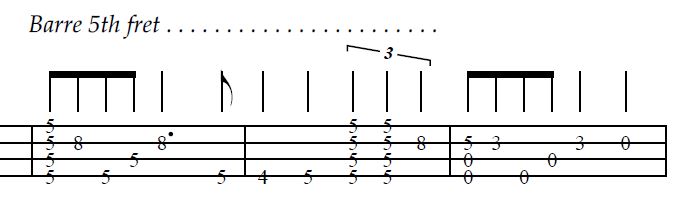
In composing solo ukulele pieces one needs to often go up the neck to achieve all of the melodic parts of the song. That means that chord inversions are used throughout. Playing typical strum-a-long songs most players play within the first several frets, but playing chord inversions means going “up the neck” In the example below notice the note to BARRE the 5 fret. That allows for the upper range notes to be played. BARRING is a hugely important technique to develop and should NOT be avoided in one’s technical development on the uke. Daily practice with BARRING will pay of in great rewards.
‘TILL THERE WAS YOU – Example 2
The notated TABLATURE for my arrangement of ‘TILL THERE WAS YOU is contained in my SOLO UKULELE INSTRUMENTALS eBook 2013 Enlarged Edition. It can be purchased for $28.95 by paying through the paypal donate button on the Ukulele Mike website: http://www.ukulelemikelynch.com Once purchased it will be emailed to you within the day.
AIN’T SHE SWEET – by Jack Yellen & Milton Ager – Ukulele arrangement by Ukulele Mike Lynch
AIN’T SHE SWEET by Jack Yellen & Milton Ager
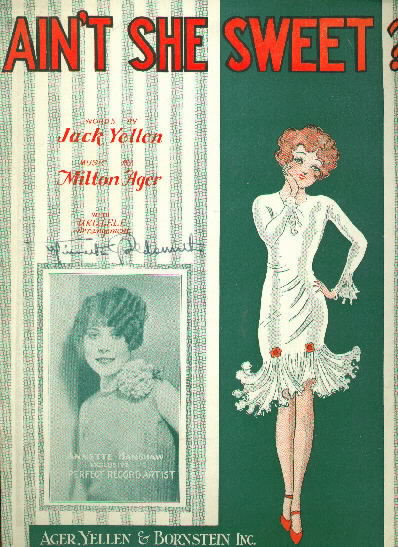
According to Wikipedia we find that “Ain’t She Sweet” is a song composed by Milton Ager (music) and Jack Yellen (lyrics) and published in 1927 by Edwin H. Morris & Co., Inc./Warner Bros., Inc. It became popular in the first half of the 20th century, one of the hit songs that typified the Roaring Twenties. Like “Happy Days Are Here Again” (1929), it became a Tin Pan Alley standard. Both Ager and Yellen were elected to membership in the Songwriters Hall of Fame.
Milton Ager wrote “Ain’t She Sweet” for his daughter Shana Ager,[citation needed] who in her adult life was known as the political commentator Shana Alexander.
It has been covered by literally thousands of recording artists and performers over the years and in 1961 the Beatles laid down the track below in Hamburg, Germany.
It’s well known that George Harrison was a huge fan of the ukulele and in 1994, in producing a televised documentary THE BEATLES ANTHOLOGY, the 3 surviving Beatles sat down in George’s back yard and recorded this charming rendition of AIN’T SHE SWEET with George on Ukulele
Below is a copy of the music as found in my SONGS OF YESTERYEAR songbook.
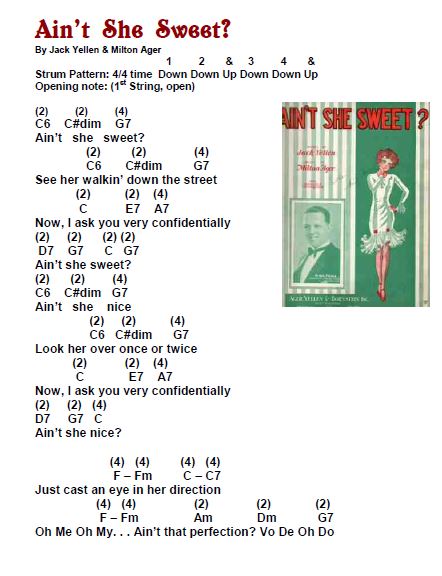

The SONGS OF YESTERYEAR songbook can be purchased for $22.95 by paying through the paypal donate button on the Ukulele Mike website: http://www.ukulelemikelynch.com Below is a video giving more information on the contents of the eBook.
 UKULELE MIKE LYNCH - All things UKULELE