
 “AURA LEA” is an excellent piece for entry level solo players. Below is a short clip from the opening measures . . .
 AURA LEA is contained in the Chord/Melody eBook TWO. The collection can be purchased for just $20.00 Just make payment through the PayPal button on the Ukulele Mike website: http://www.ukulelemikelynch.com Once purchased, it will be personally emailed to you within the day.
 Table of Contents
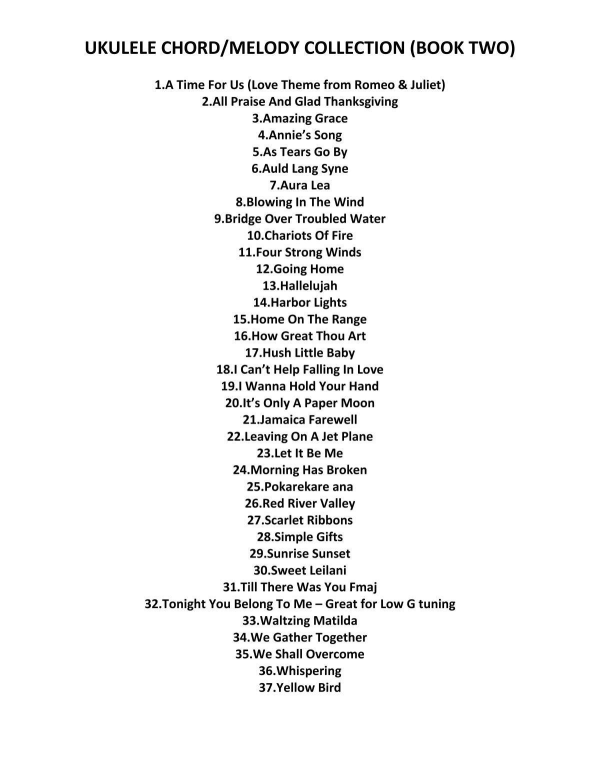 Each of the Chord/Melody eBooks can be purchased separately for just $20.00 or all together at a new Combo “TRILOGY” discount of just $50.00
 For questions regarding any Ukulele Resource, please email: TheUkuleleMan2012@hotmail.com
 Performance of “Harbor Lights” by The Platters
Take a look at the short clip below . . .
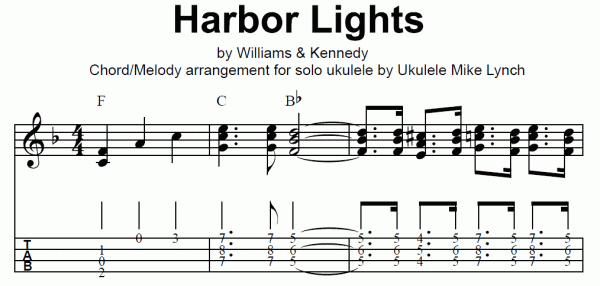 One of the coolest things about this song and this arrangement is the frequent use of CHROMATIC shifts. . . You see it clearly in the THIRD measure above. You will even see whole step shifts as well . . . It’s a key “signature” to this tune and lends a very romantic feel . . . . This, by the way is often found in Hawaiian music as well. . .
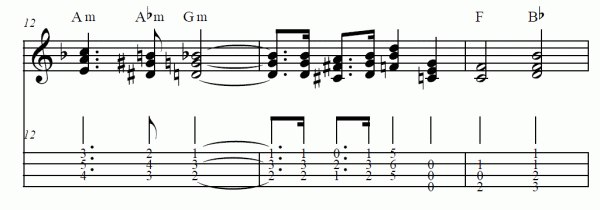 Check out the delicious descending progression of Am to Abm to Gm above . . .
“Harbor Lights” is contained in the Chord/Melody eBook TWO and can be purchased by making a payment of just $20.00 through the PayPal button on the Ukulele Mike website: http://www.ukulelemikelynch.com Once purchased, it will be personally emailed to you within the day.
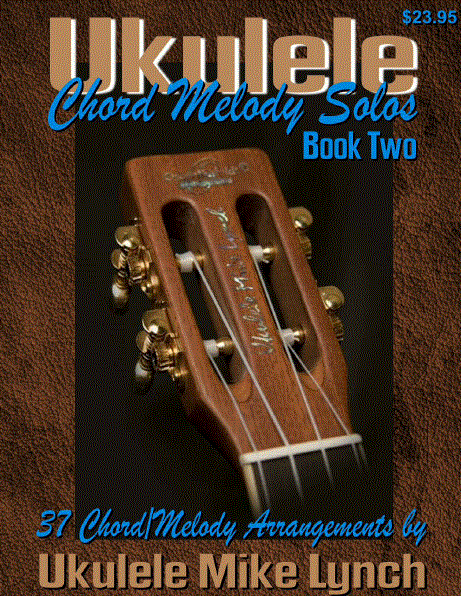 Table of…
View original post 35 more words
 Performance of “O Shenandoah” by Sissel
From Wikipedia we learn that “Oh Shenandoah” (also called simply “Shenandoah” or “Across the Wide Missouri”) is a traditional Americanfolk song of uncertain origin, dating at least to the early 19th century.
The song appears to have originated with Canadian and American voyageurs or fur traders traveling down the Missouri River in canoes, and has developed several different sets of lyrics. Some lyrics refer to the Native American chief “Shenandoah” (Oskanondonha) and a canoe-going trader who wants to marry his daughter. By the mid 1800s versions of the song had become a sea shanty heard or sung by sailors in various parts of the world
Until the 19th century only adventurers who sought their fortunes as trappers and traders of beaver fur ventured as far west as the Missouri River. Most of these Canadian and American “voyageurs” in…
View original post 411 more words

Accepting a generous invitation of dear friends a number of years ago, my wife and I spent a relaxing week on Liberty Bay in the tiny town of Keyport, Washington. While there I was inspired to compose this lazy little ragtime tune and it became a constant soundtrack to my musings on the porch of the bay side cottage we were living in. Taking walks around the town, I had the melody of this little tune running through my head and I would frequently head back to the cottage to pick up my ukulele and try out new ideas that would pop into my brain. KEYPORT RAG is largely played in a swinging, bouncy, travis picking style and below is a small example of the tablature arrangement of this song.
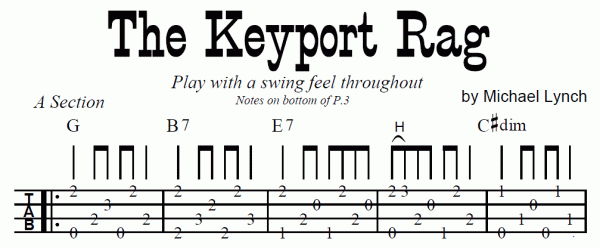 To perform this piece, a fair amount of previous travis technique is required. It does take a bit of time and patience to…
View original post 179 more words
 Live performance of Bob Dylan performing “Blowing In The Wind” 1963
Peter, Paul & Mary performing “Blowing In The Wind”
“Blowin’ in the Wind” is a song written by Bob Dylan in 1962 and released on his album The Freewheelin’ Bob Dylan in 1963. Although it has been described as a protest song, it poses a series of rhetorical questions about peace, war and freedom. The refrain “The answer, my friend, is blowin’ in the wind” has been described[by whom?] as “impenetrably ambiguous: either the answer is so obvious it is right in your face, or the answer is as intangible as the wind”. In 1999, the song was inducted into the Grammy Hall of Fame. In 2004, it was ranked #14 on Rolling Stone magazine’s list of the “500 Greatest Songs of All Time”.
Below are the opening measures of “Blowing In The Wind” showing both standard notation as…
View original post 193 more words
 Live performance of Pokarekare ana by Hayley Westenra
We learn from Wikipedia that Pokarekare Ana” is a traditional New Zealand love song, probably communally composed about the time World War I began in 1914. The song is written in Māori and has been translated into English. It enjoys widespread popularity in New Zealand as well as some popularity in other countries. East Coast Māori song-writer Paraire Tomoana, who polished up the song in 1917 and published the words in 1921, wrote that “it emanated from the North of Auckland” and was popularised by Māori soldiers who were training near Auckland before embarking for the war in Europe.
There have been numerous claims and counterclaims regarding authorship over the years. Although the matter has never been definitively settled, guardianship of the words and music is held by the family (descendants) of Paraire Tomoana.
The Māori words have…
View original post 343 more words
 Note: Now available my UKULELE BASICS DVD. For more info email me at mike@ukulelemikelynch.com
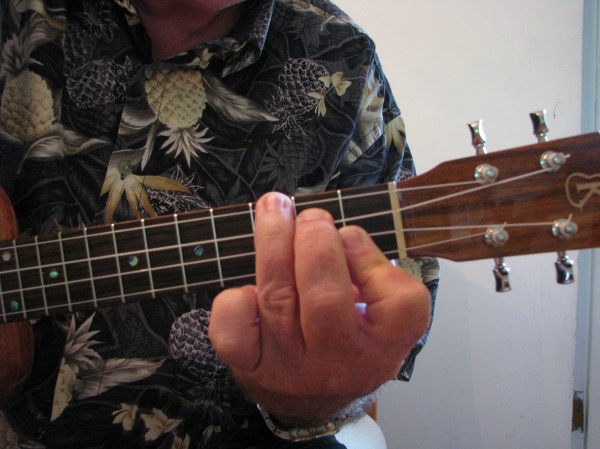
How often have you found yourself playing a song in the key of F and that Bb chord pops up and all of a sudden your playing comes to a crashing halt as you contort your hand to achieve a good, clean, clear sound that’s even remotely reconizable as a real chord??? I can’t begin to tell you how often I’ve dealt with this issue with my students. It just seems to be one of those annoying chords but still a very very important chord to know. The Key of F maj is a particular good key for Ukulele. It is one of the most often keys used for playing instrumentals and solos. So, at some time we really do need to conquer that irritating Bb chord ha ha ha. . . So, here are some…
View original post 290 more words

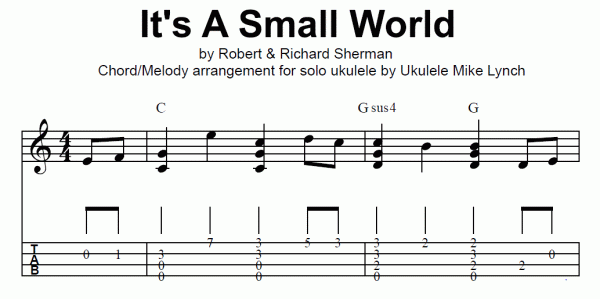
TWO short excerpts from the Chord/Melody arrangement below . . .
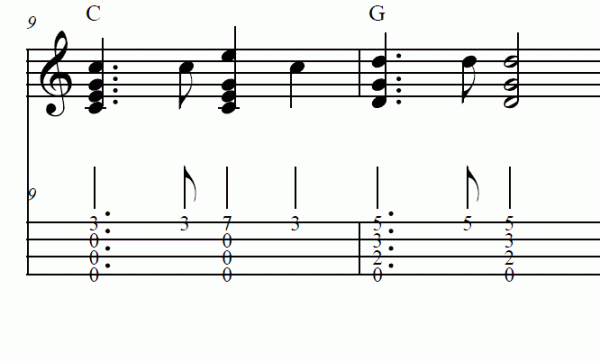
 Opening of Chorus:
 It’s A Small World is Contained in the Chord/Melody eBook THREE . . . The collection can be purchased by making a payment of $20.00 through the paypal button on the Ukulele Mike website: http://www.ukulelemikelynch.com Once purchased, it will be personally emailed to you within the day . . .
 Table of contents . . .
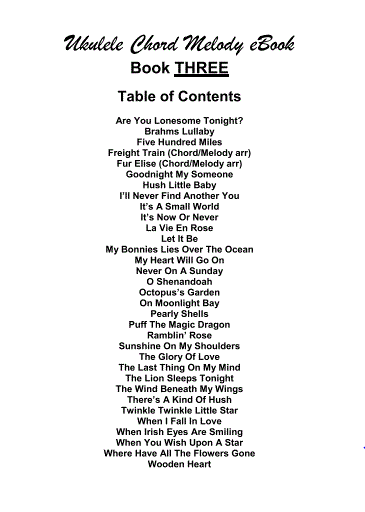 Each of the Chord/Melody ebooks can be purchased separately for just $20.00 or all together at the new “TRILOGY discount for just $50.00

Questions regarding any ukulele resources, please email: TheUkuleleMan2012@hotmail.com
 We learn from Wikipedia that “Cradle Song” is the common name for a number of children’s lullabies with similar lyrics, the original of which was Johannes Brahms‘ “Wiegenlied: Guten Abend, gute Nacht” (“Good evening, good night”), Op. 49, No. 4, published in 1868 and widely known as Brahms’ Lullaby. The lyrics of the first verse are from a collection of German folk poems called Des Knaben Wunderhorn and the second stanza was written by Georg Scherer (1824–1909) in 1849. The lullaby’s melody is one of the most famous and recognizable in the world, used by countless parents to sing their babies to sleep. The Lullaby was dedicated to Brahms’ friend, Bertha Faber, on the occasion of the birth of her second son. Brahms had been in love with her in her youth and constructed the melody of the Wiegenlied to suggest, as a hidden counter-melody, a…
View original post 265 more words
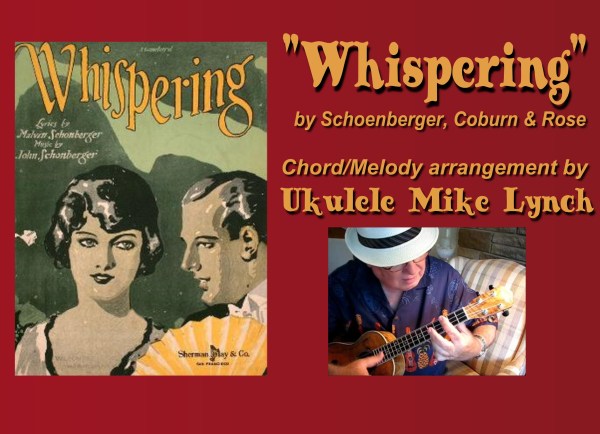 Performance by the Paul Whiteman Orchestra
According to Wikipedia, “Whispering” is a popular song by lyricists John Schoenberger (1892–1983) and Richard Coburn (pseudonym of Frank Reginald DeLong; 1886–1952) and composer Vincent Rose. “Whispering” was first published in 1920 by Sherman, Clay & Co., of San Francisco. The initial 1920 copyright and first publishing attributes the lyrics to Malvin Schonberger and the music to John Schonberger.
“Whispering” was most famously recorded by Paul Whiteman and his Ambassador Orchestra on August 23, 1920, for Victor. Whiteman — Denver-born, ex-army, and self-acclaimed “King of Jazz” flourished — flourished in popularity from series of hits beginning in 1920 with his release of “Whispering”, an eleven-week U.S. No. 1 hit, which stayed 20 weeks in the charts and sold in excess of two million copies.y
“Whispering” works perfectly as a Chord/Melody arrangement . . . Look at the opening measure of “Whispering” from…
View original post 139 more words
 UKULELE MIKE LYNCH - All things UKULELE